Spray Foam Insulation
Core spray foam pages that explain material types, costs, R-values, and common alternatives.
What each foam costs and where it performs — for homes, pole barns, and metal buildings across Kokomo and north-central Indiana.
Quick Answer
Open-cell foam ($0.35–$0.45/board foot, R-3.6 per inch) suits attics and interior sound control; closed-cell ($1.25–$1.40/board foot, R-6.5 per inch) is denser, resists moisture, and is the standard for crawl spaces, rim joists, and the metal buildings and pole barns common across Howard County. For an unheated outbuilding, closed-cell on the roof deck is usually the answer.
| Feature | Open-Cell | Closed-Cell |
|---|---|---|
| R-Value per Inch | R-3.6 to R-3.9 | R-6.5 to R-7.0 |
| Installed Cost (per board foot) | $0.35 - $0.45 | $1.25 - $1.40 |
| Density | 0.5 lb/ft³ (light, spongy) | 1.75 - 2.0 lb/ft³ (rigid) |
| Vapor Barrier | No (vapor permeable) | Yes (Class II at 1.5" or more) |
| Air Barrier | Yes (at 3.5" thickness) | Yes (at 1" thickness) |
| Moisture Absorption | Can absorb and release moisture | Resists moisture; closed-cell structure repels water |
| Structural Strength | No racking strength added | Can add significant racking strength to wall assemblies (up to 300% in lab testing) |
| Expansion Ratio | Expands ~100x (fills large cavities easily) | Expands ~35x (precise application in thinner lifts) |
| Sound Reduction | Excellent (soft, porous structure dampens sound) | Good (dense but less sound absorption) |
| Typical Lifespan | Life of the building under normal conditions | Life of the building under normal conditions |
R-Value per Inch
R-3.6 to R-3.9
R-6.5 to R-7.0
Installed Cost (per board foot)
$0.35 - $0.45
$1.25 - $1.40
Density
0.5 lb/ft³ (light, spongy)
1.75 - 2.0 lb/ft³ (rigid)
Vapor Barrier
No (vapor permeable)
Yes (Class II at 1.5" or more)
Air Barrier
Yes (at 3.5" thickness)
Yes (at 1" thickness)
Moisture Absorption
Can absorb and release moisture
Resists moisture; closed-cell structure repels water
Structural Strength
No racking strength added
Can add significant racking strength to wall assemblies (up to 300% in lab testing)
Expansion Ratio
Expands ~100x (fills large cavities easily)
Expands ~35x (precise application in thinner lifts)
Sound Reduction
Excellent (soft, porous structure dampens sound)
Good (dense but less sound absorption)
Typical Lifespan
Life of the building under normal conditions
Life of the building under normal conditions
Pros
Cons
Pros
Cons
Open-cell spray foam is the most popular choice for unvented attic assemblies. Applied between rafters at 5.5 to 7.5 inches, it delivers R-20 to R-28, creates an air seal, and keeps the attic space conditioned.
Open-Cell (cost-effective, excellent air seal)Below-grade spaces face constant moisture pressure from the surrounding soil. In Indiana's humid continental climate, freeze-thaw cycling drives additional moisture through foundation walls, making vapor barrier protection critical. Closed-cell spray foam's vapor barrier properties and water resistance make it the clear winner here.
Closed-Cell (moisture barrier is critical)Closed-cell foam in exterior 2x4 or 2x6 walls delivers R-13 to R-21 in a single application while adding structural integrity. In mixed climate zones, a hybrid approach — closed-cell on the exterior side with open-cell filling the remainder — balances cost and performance.
Closed-Cell or HybridWhen thermal performance isn't the priority but noise reduction is, open-cell spray foam outperforms closed-cell and fiberglass alike. Its soft, porous structure absorbs sound across a wide frequency range.
Open-Cell (superior soundproofing)Metal structures are prone to condensation. Closed-cell foam applied directly to the interior of metal panels provides insulation, an air barrier, and a vapor barrier in one step — eliminating condensation risk.
Closed-Cell (condensation control is essential)Commercial flat and low-slope roofs benefit from closed-cell spray foam applied to the underside of the roof deck. It eliminates thermal bridging through metal fasteners, provides a continuous air and vapor barrier, and can extend roof life by reducing thermal cycling stress on the membrane.
Closed-Cell (vapor barrier + structural benefit)Large commercial spaces with high ceilings and metal construction lose enormous energy through the building envelope. Closed-cell spray foam on walls and roof decks creates an unbroken thermal and moisture barrier — critical for temperature-controlled warehouses, cold storage, and food processing facilities.
Closed-Cell (continuous barrier for large envelopes)Our Verdict
Open-cell for attics, rooflines, and soundproofing. Closed-cell for crawl spaces, rim joists, exterior walls, and the pole barns and metal buildings you find all over north-central Indiana. Run the calculator for an estimate, then we'll confirm the right spec on a free quote.
Yes — and around Howard County it's common to combine them: closed-cell where moisture or metal is in play, open-cell in the attic and interior walls. Yes, and it's a common cost-saving strategy. A hybrid approach uses closed-cell foam in moisture-prone areas like crawl spaces and rim joists, then open-cell foam in attics and interior walls where vapor permeability is acceptable. This targets performance where it matters most while keeping overall costs down.
In moisture-prone areas (crawl spaces, basements, metal buildings), the built-in vapor barrier and water resistance make closed-cell worth every penny. In dry interior applications like attic rafters, open-cell typically delivers better value because you get effective air sealing and insulation at roughly half the cost per square foot.
Open-cell spray foam is significantly better for sound reduction. Its soft, porous cell structure absorbs sound waves across a broad frequency range, achieving STC (Sound Transmission Class) ratings of 37 to 39 in standard 2x4 walls — compared to STC 34 to 36 for closed-cell in the same assembly. For dedicated sound control, open-cell is the clear choice.
When installed correctly on the warm side of the wall assembly, closed-cell foam prevents moisture from reaching cold surfaces where condensation would occur. Problems arise only from improper installation — such as insufficient thickness to qualify as a vapor retarder, or application on the wrong side of the assembly. A qualified installer will assess your wall assembly and climate zone before specifying placement.
Open-cell spray foam achieves an effective air barrier at 3.5 inches (a full 2x4 cavity). Closed-cell spray foam reaches air-barrier performance at just 1 inch. Both types dramatically reduce air infiltration compared to fiberglass batts, which provide no air-sealing capability regardless of thickness.
Open-cell spray foam provides R-3.6 to R-3.9 per inch, while closed-cell delivers R-6.5 to R-7.0 per inch. In practical terms, a 2x6 wall cavity (5.5 inches deep) filled with open-cell yields about R-20, whereas 3 inches of closed-cell in the same cavity provides R-19.5 to R-21 — similar thermal performance in nearly half the thickness.
Yes. Per IRC Section 316.4, spray foam installed in occupied spaces must be covered by a 15-minute thermal barrier (typically 1/2" drywall). In non-occupied areas like attics and crawl spaces, an ignition barrier (such as 1.5" mineral fiber or an approved coating) is required instead. Some spray foam products carry ICC-ES evaluation reports allowing reduced barrier requirements. Your installer should verify code compliance for your specific application — this is a critical safety detail that every qualified spray foam contractor addresses during the quoting process.
Related
Core spray foam pages that explain material types, costs, R-values, and common alternatives.
Attic-focused pages for roof decks, air sealing, foam type selection, and cost planning.
Crawl space pages that connect moisture control, closed-cell foam, and residential retrofit planning.
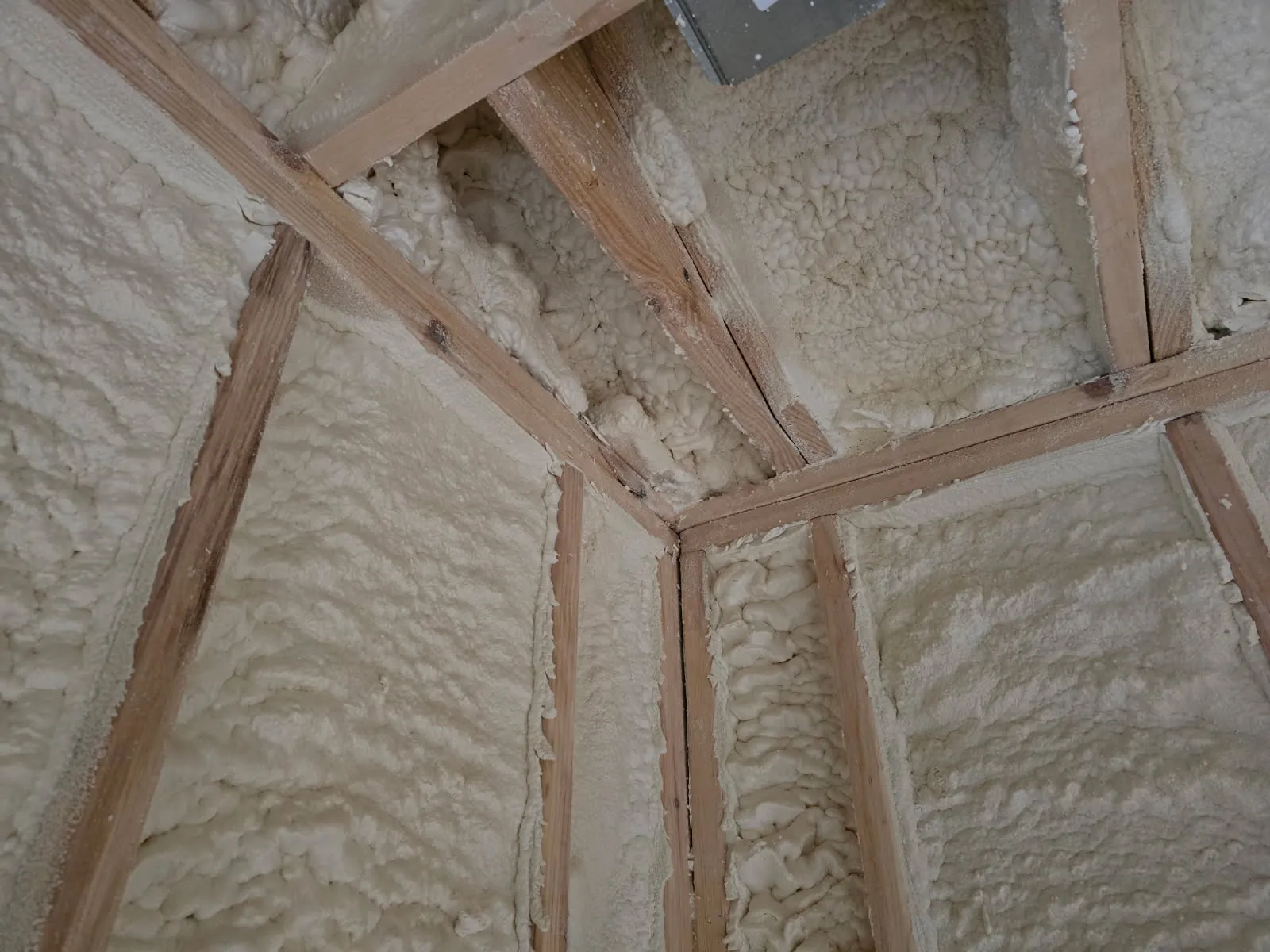
R-3.6 per inch with excellent air sealing and sound dampening. Ideal for new construction, multi-family, and commercial interiors.
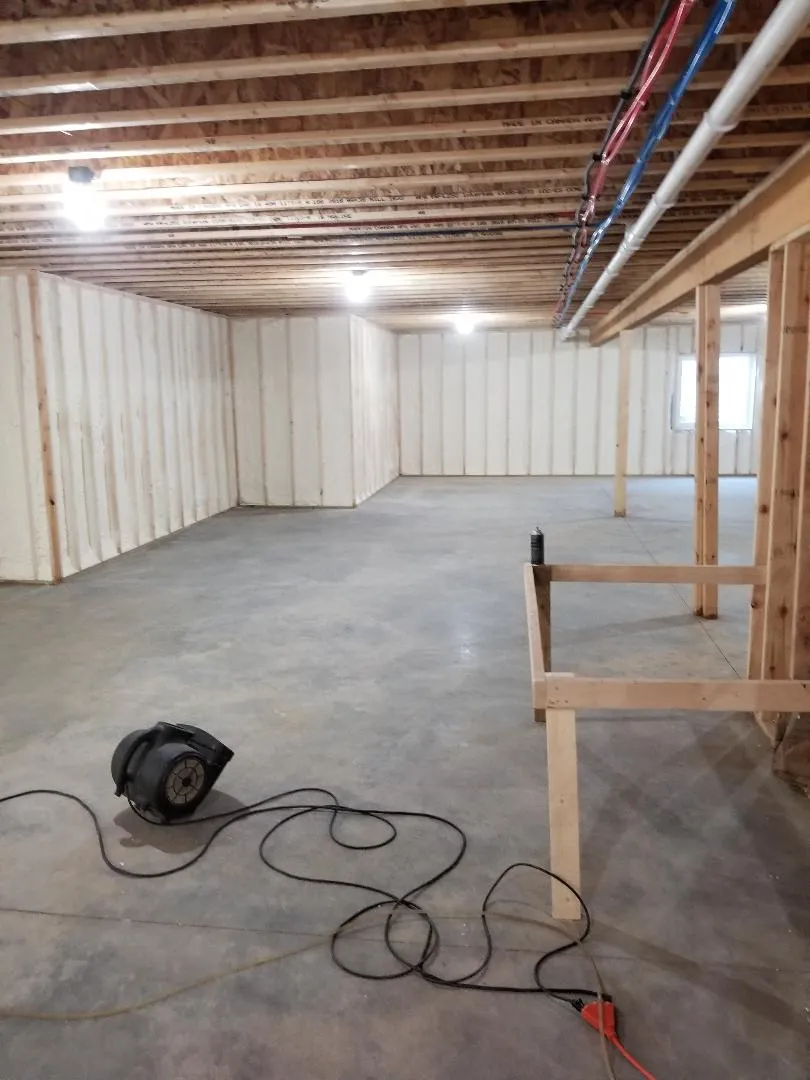
R-6.5 per inch with integrated vapor barrier and structural racking strength. The standard for commercial exteriors, metal buildings, and cold storage.
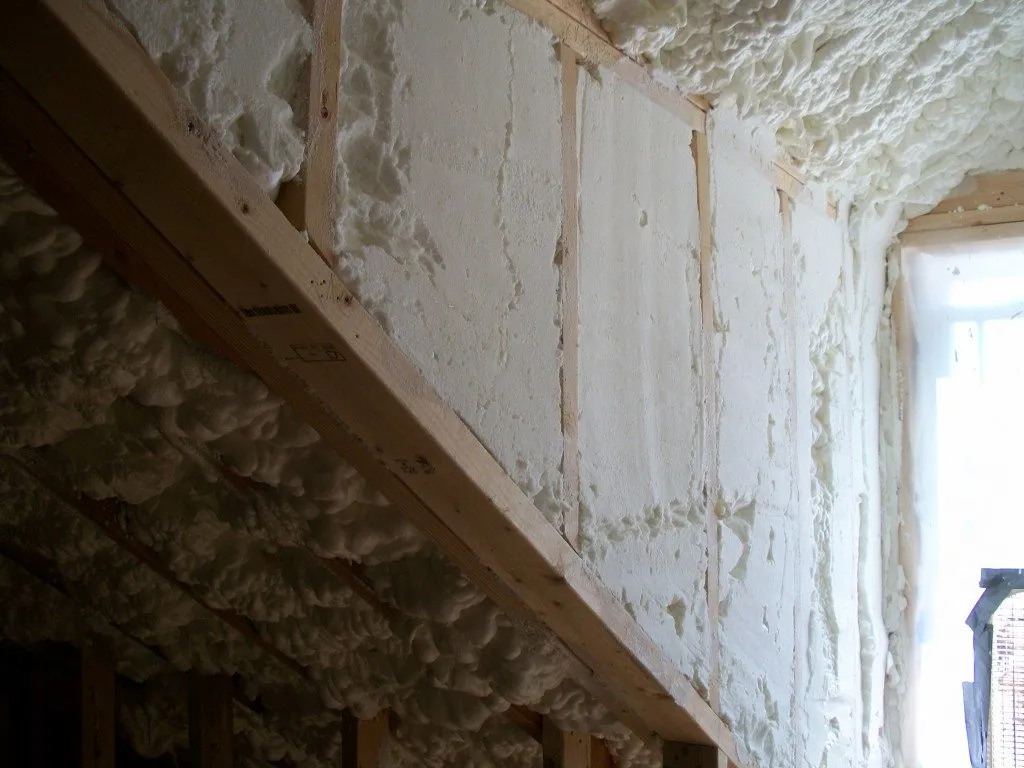
Stop losing heat through your roof. Attic spray foam targets the biggest source of energy loss in Indiana homes.
Get a free, no-obligation quote today.