Spray Foam Insulation
Core spray foam pages that explain material types, costs, R-values, and common alternatives.
What you actually get for the money — compared for homes and outbuildings across Kokomo and north-central Indiana.
Quick Answer
Spray foam air-seals and insulates together; fiberglass only slows heat and leaks air at every seam. Foam costs more upfront, but the EPA estimates sealing and insulating saves a typical home roughly 15% on heating and cooling. For older Kokomo homes — and for metal buildings where fiberglass sags and traps moisture — foam is usually the better long-term call.
| Feature | Spray Foam | Fiberglass |
|---|---|---|
| R-Value per Inch | R-3.6 (open-cell) to R-7.0 (closed-cell) | R-2.5 (loose-fill) to R-3.8 (high-density batts) |
| Air Sealing | Yes — expands to fill every gap and crack | None — air flows freely around and through batts |
| Moisture Resistance | Closed-cell resists water; open-cell allows drying | Absorbs moisture, loses R-value when wet |
| Mold Resistance | Inert polymer — does not support mold growth | Can trap moisture against surfaces, promoting mold |
| Installed Cost (per sq ft, R-19) | $1.50 - $3.50 | $0.50 - $1.20 |
| Lifespan | Life of the building under normal conditions (no settling) | 15 - 25 years (sags, compresses, loses R-value) |
| Installation Quality | Fills every cavity, gap, and irregular shape | Depends on installer precision; gaps are common |
| Energy Savings | ~15% on heating/cooling (EPA seal-and-insulate estimate) | Less — no air sealing, so leakage limits performance |
| Sound Reduction | Good to excellent (especially open-cell) | Moderate |
| Structural Benefit | Closed-cell adds racking strength to walls | None |
R-Value per Inch
R-3.6 (open-cell) to R-7.0 (closed-cell)
R-2.5 (loose-fill) to R-3.8 (high-density batts)
Air Sealing
Yes — expands to fill every gap and crack
None — air flows freely around and through batts
Moisture Resistance
Closed-cell resists water; open-cell allows drying
Absorbs moisture, loses R-value when wet
Mold Resistance
Inert polymer — does not support mold growth
Can trap moisture against surfaces, promoting mold
Installed Cost (per sq ft, R-19)
$1.50 - $3.50
$0.50 - $1.20
Lifespan
Life of the building under normal conditions (no settling)
15 - 25 years (sags, compresses, loses R-value)
Installation Quality
Fills every cavity, gap, and irregular shape
Depends on installer precision; gaps are common
Energy Savings
~15% on heating/cooling (EPA seal-and-insulate estimate)
Less — no air sealing, so leakage limits performance
Sound Reduction
Good to excellent (especially open-cell)
Moderate
Structural Benefit
Closed-cell adds racking strength to walls
None
Pros
Cons
Pros
Cons
When walls and cavities are open, spray foam gives you the best long-term performance envelope. The cost premium is smallest during new construction because the cavities are already accessible.
Spray FoamIf the property will be sold or significantly renovated within 5 years, the energy savings may not offset the upfront cost of spray foam. Fiberglass batts provide baseline insulation at the lowest cost.
Fiberglass (short-term economics favor it)These areas are exposed to ground moisture and outside air infiltration. Closed-cell spray foam is the only insulation that simultaneously insulates, air-seals, and provides a moisture barrier in these critical zones.
Spray Foam (closed-cell)If existing fiberglass in an attic is thin or settling, adding blown-in fiberglass or cellulose on top can be cost-effective. But if you're starting from scratch or need air sealing, spray foam on the roofline is superior.
Depends on existing conditionsCommercial buildings face higher air infiltration loads due to frequent door openings, large HVAC systems, and complex rooflines. Spray foam's air-sealing capability reduces energy waste significantly in these demanding environments, while fiberglass in commercial drop ceilings and metal stud walls consistently underperforms due to air bypass.
Spray Foam (air sealing ROI is highest in commercial)Our Verdict
Spray foam wins for air-sealing older homes and for metal buildings and pole barns where fiberglass simply doesn't hold up. Fiberglass remains a fine budget choice for open attic floors. We'll quote both so you can decide.
The EPA estimates that sealing air leaks and adding insulation cuts heating and cooling costs by about 15% on average — and the Department of Energy puts the typical whole-home savings from air sealing plus insulation at roughly $200 to $600 a year, depending on home size, climate, and energy rates. In Indiana (Climate Zone 5), where heating dominates energy bills, the colder climate pushes savings toward the higher end.
It is not recommended. Fiberglass batts should be removed before applying spray foam. Leaving fiberglass in place can trap moisture between the two materials, reduce the spray foam's adhesion to the substrate, and prevent proper inspection of the cavity. Removal adds cost but ensures the spray foam performs as designed.
Fiberglass is not inherently bad — it's a proven thermal insulator that has been used successfully for decades. Its limitations are air sealing (it has none), moisture performance (it degrades when wet), and longevity (it sags and loses R-value over 15 to 25 years). In applications where air sealing and moisture resistance are not critical, fiberglass can be adequate.
Spray foam insulation lasts the life of the building without settling, sagging, or losing R-value. Fiberglass batts typically begin degrading after 15 years and should be replaced every 15 to 25 years to maintain rated performance. Over a 50-year period, you would likely replace fiberglass at least twice while spray foam remains intact.
Yes. Because spray foam creates a complete air seal, it reduces the pathways through which outdoor allergens, dust, pollen, and pollutants enter the home. Homes with comprehensive air sealing have fewer avenues for outdoor contaminants compared to fiberglass, which allows air — and everything it carries — to pass through freely.
Older homes often benefit the most from spray foam because they tend to have the worst air leakage. Homes built before 1980 commonly have little or no air sealing. The EPA estimates that sealing and insulating cuts heating and cooling costs by about 15% on average, and the leakiest older homes tend to land at the higher end. Because the savings are larger where leakage is worst, the payback period for older homes is often shorter than for newer construction.
Commercial buildings typically see an even stronger return from spray foam than residential. Higher air infiltration loads from frequent door openings, complex rooflines, and large HVAC systems mean the air-sealing benefit has a bigger impact. The EPA's seal-and-insulate estimate is about 15% on heating and cooling for a typical building, and commercial envelopes with heavy air infiltration often benefit more — the bigger the leakage problem, the bigger the savings.
Related
Core spray foam pages that explain material types, costs, R-values, and common alternatives.
Crawl space pages that connect moisture control, closed-cell foam, and residential retrofit planning.
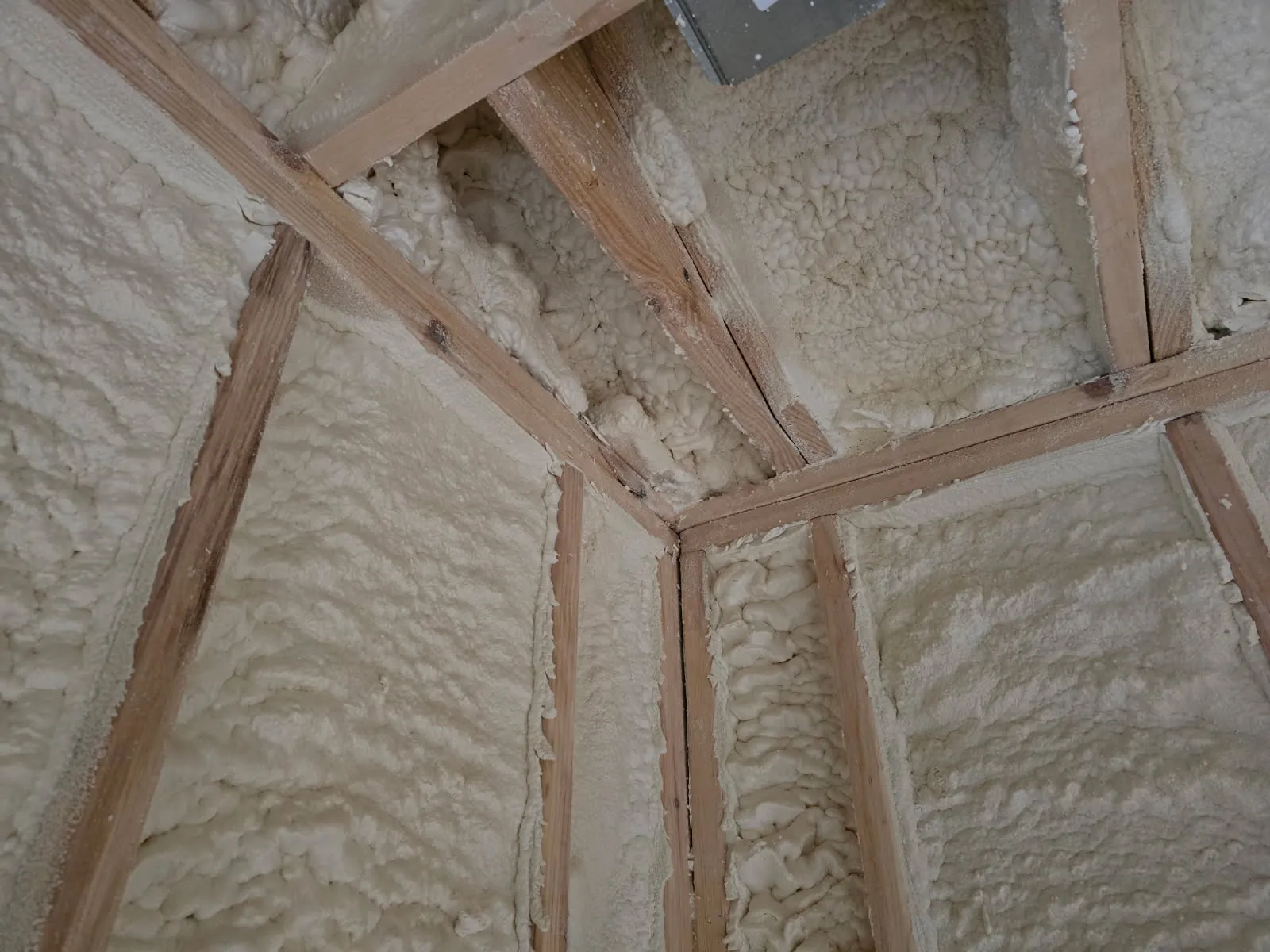
R-3.6 per inch with excellent air sealing and sound dampening. Ideal for new construction, multi-family, and commercial interiors.
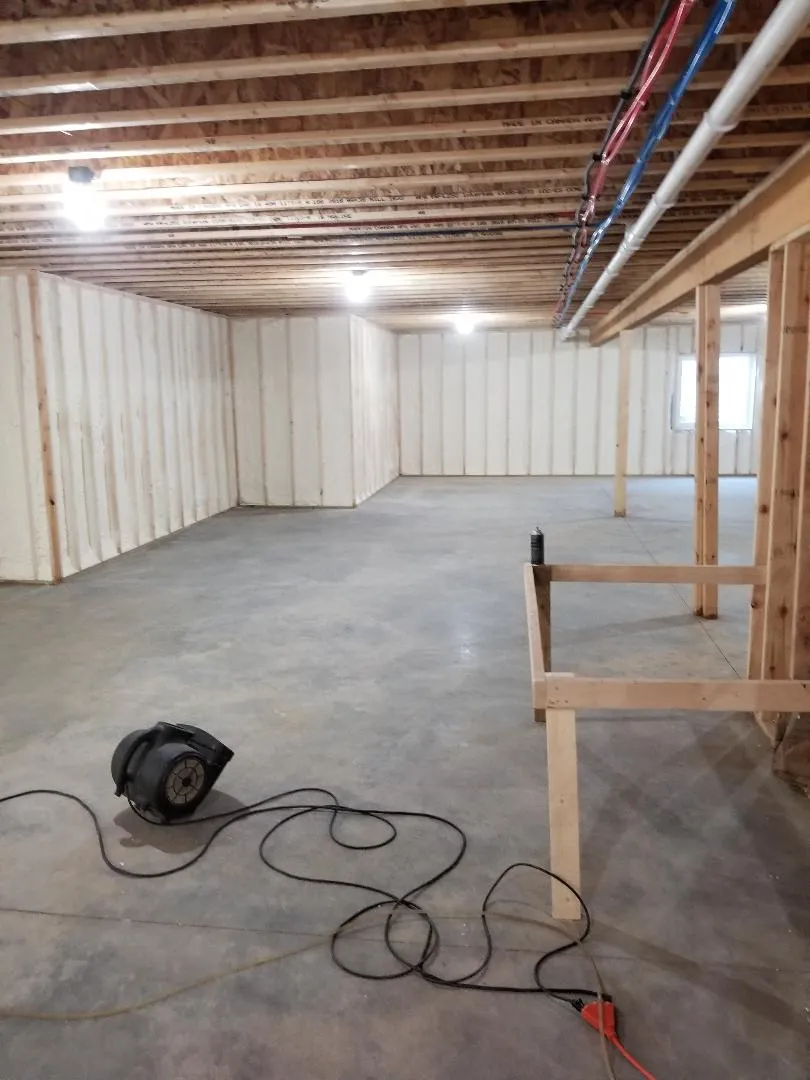
R-6.5 per inch with integrated vapor barrier and structural racking strength. The standard for commercial exteriors, metal buildings, and cold storage.
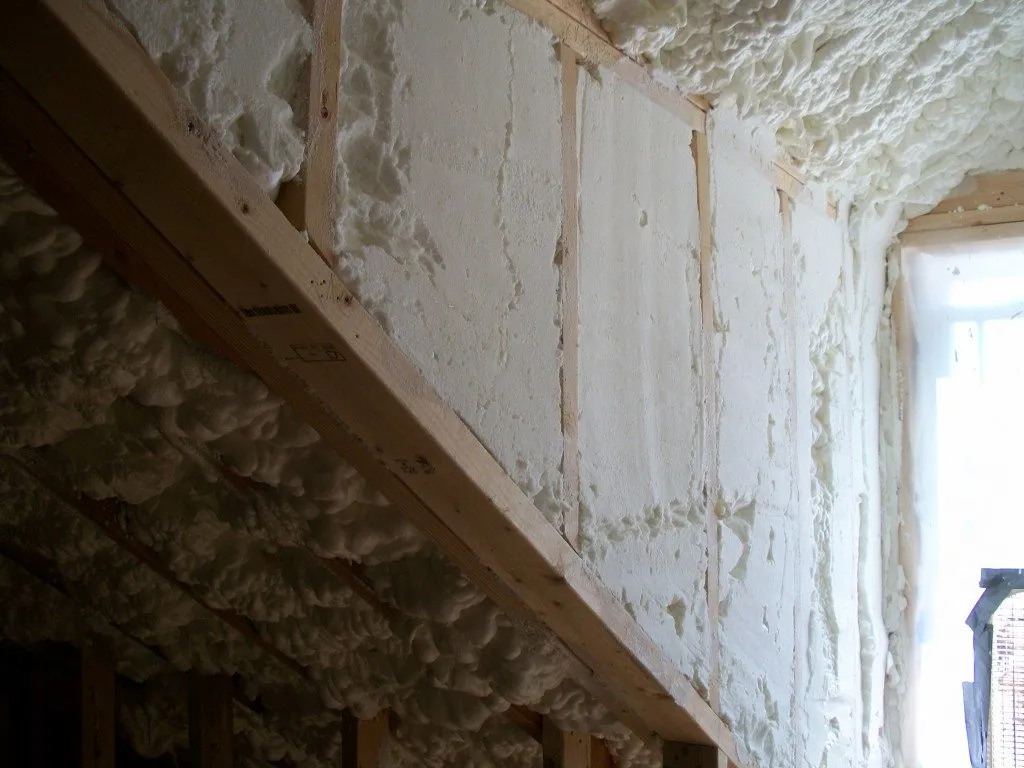
Stop losing heat through your roof. Attic spray foam targets the biggest source of energy loss in Indiana homes.
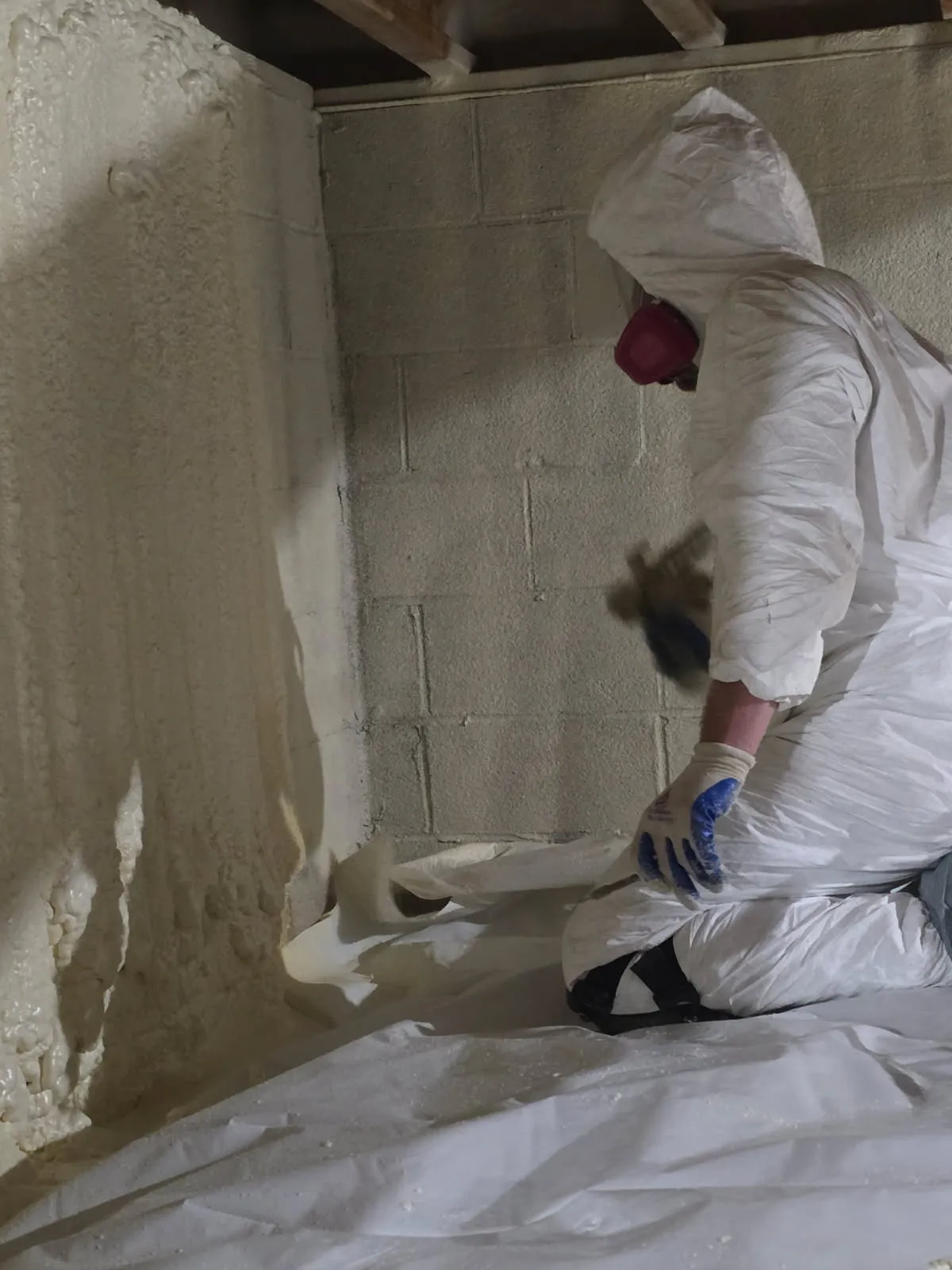
Seal out moisture, mold, and cold floors. Closed-cell crawl space encapsulation for a dry, energy-efficient foundation.
Get a free, no-obligation quote today.