Metal Buildings and Pole Barns
Post-frame and metal-building pages that focus on condensation, closed-cell foam, and durable envelopes.
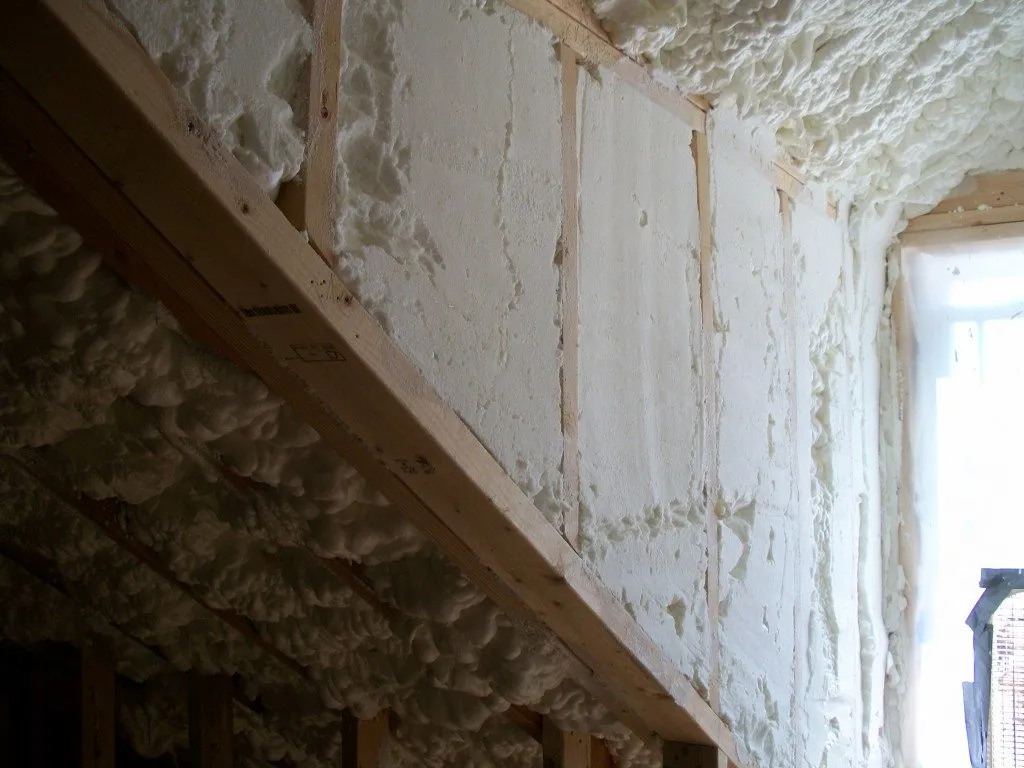
Closed-cell application for metal panel buildings. Thermal break at the dew point eliminates condensation year-round.
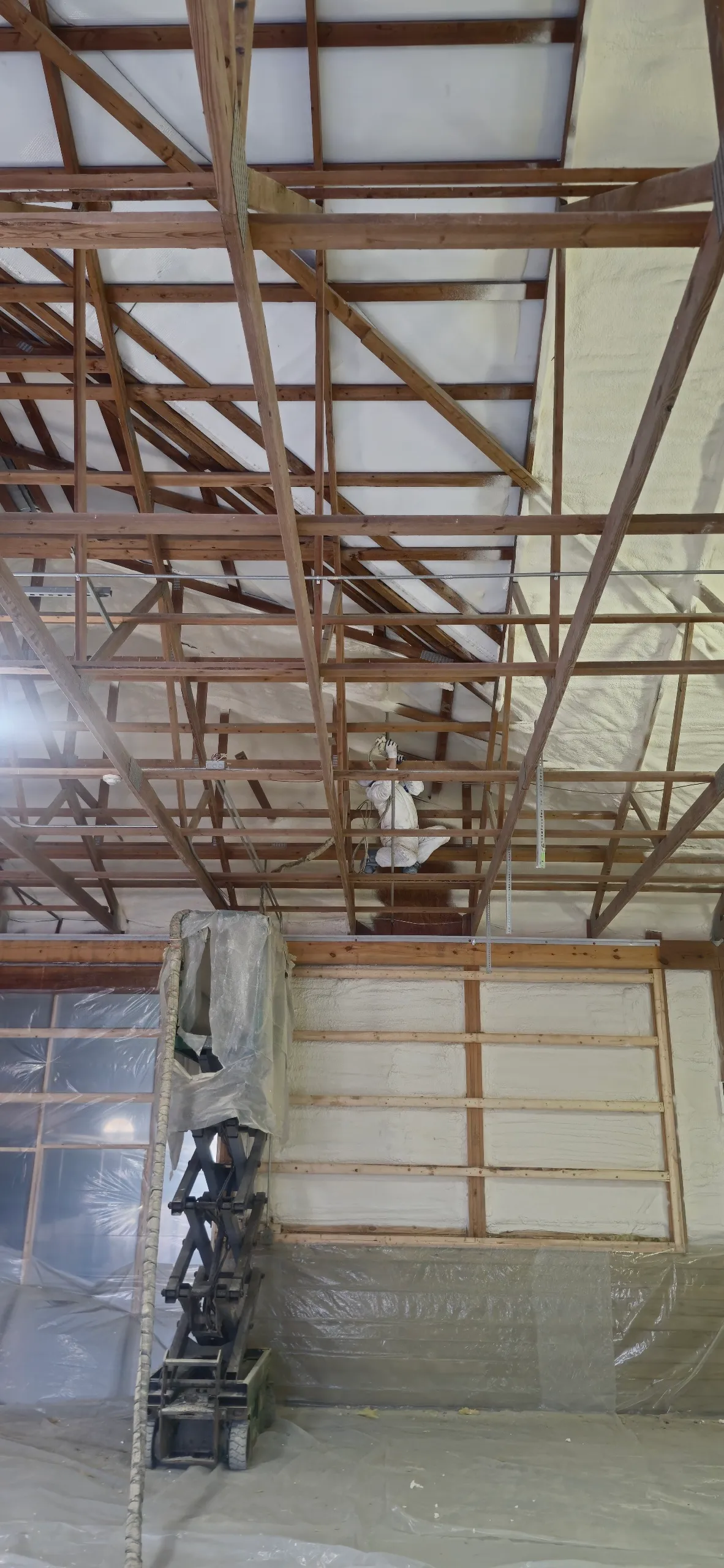
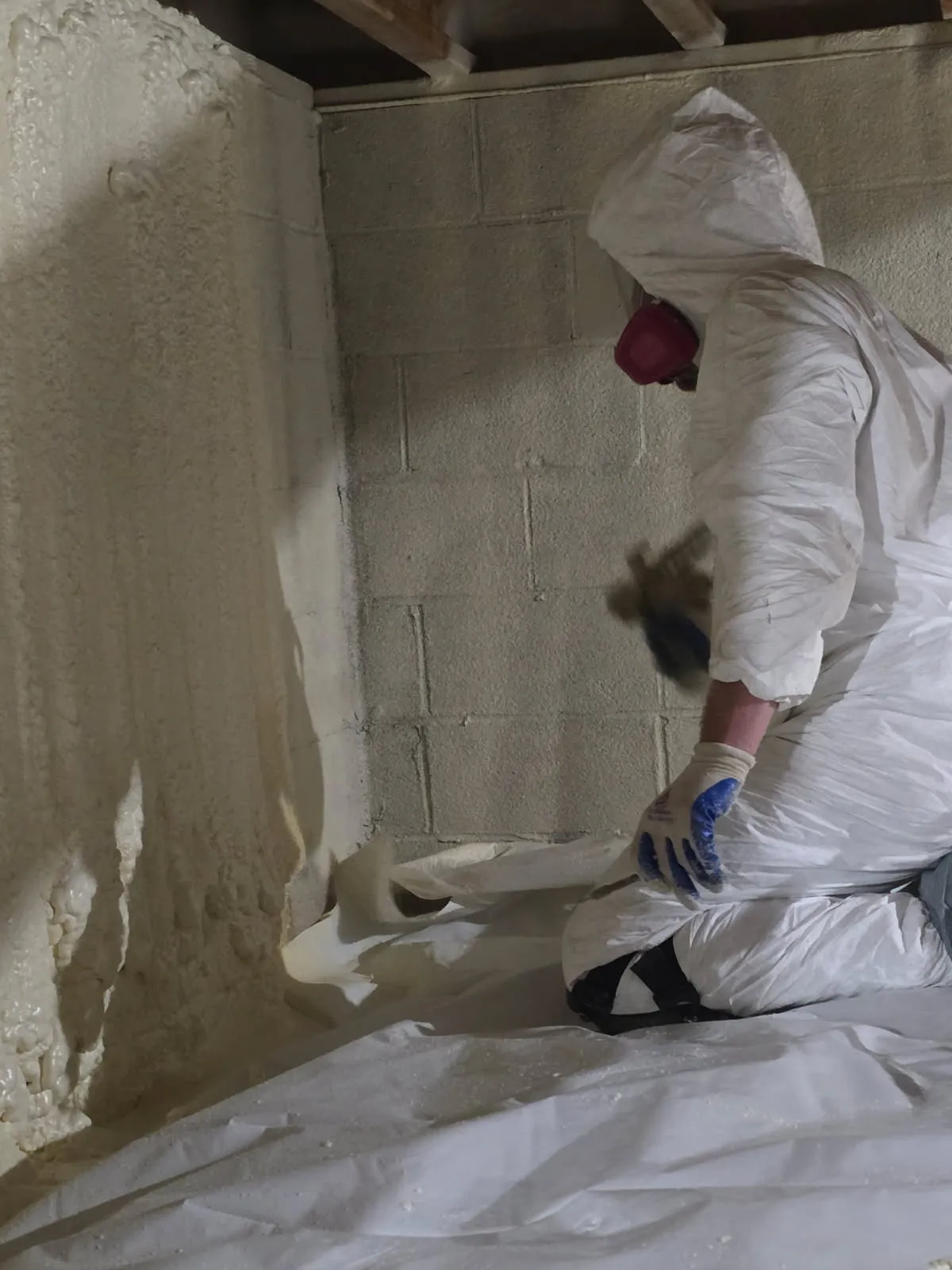
Post-frame and metal panel structures present unique thermal challenges: high surface conductivity, large air volumes, and severe condensation potential at the interior panel face. We apply closed-cell foam (minimum 2 inches for vapor barrier performance) directly to the interior face of metal panels, creating a thermal break that moves the dew point away from the metal surface and into the foam layer. This eliminates condensation, controls interior temperatures, and reduces energy consumption. The foam adheres to metal, wood, and concrete substrates without fasteners.
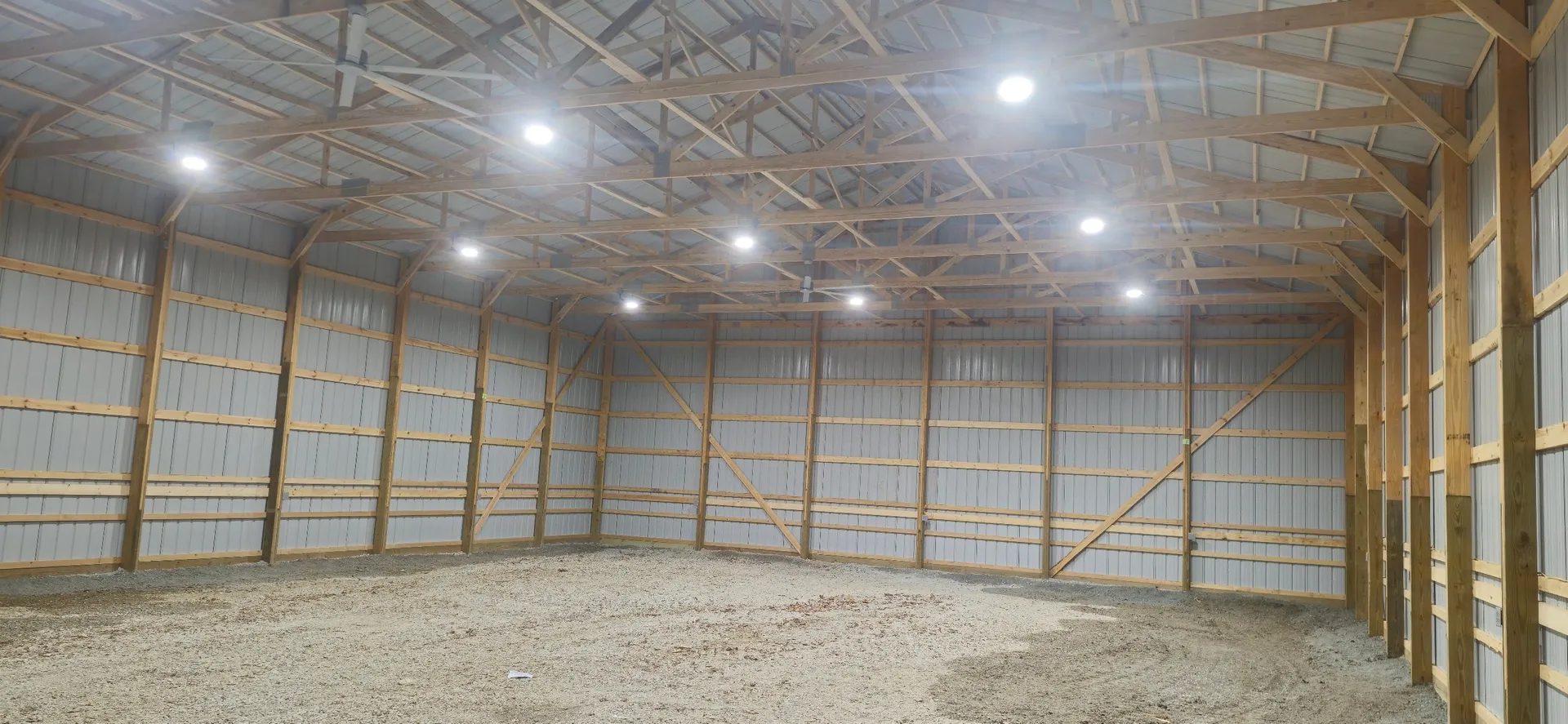
Post-frame (pole barn) and metal panel buildings dominate the agricultural and light-commercial landscape across Howard, Cass, Miami, and Grant counties. These structures share a fundamental thermal deficiency: steel and aluminum panels have thermal conductivity approximately 1,000 times that of wood, creating a building envelope with virtually zero thermal resistance. The result is predictable — severe condensation when interior dew point temperature exceeds exterior panel surface temperature, and extreme interior temperature swings that track outdoor conditions with minimal lag.
The condensation mechanism is precise: when warm, moisture-laden interior air contacts a metal panel whose surface temperature is below the dew point, water vapor condenses directly on the panel. In a typical uninsulated pole barn in Kokomo, this occurs on approximately 180 days per year — every night from October through April and during most summer evenings when daytime humidity remains elevated as panels cool. The resulting moisture promotes corrosion of steel fasteners and panels, degrades stored equipment, and creates conditions for mold growth on any organic material in the building.
Closed-cell spray foam applied directly to the interior face of metal panels solves both the condensation and temperature problems simultaneously. The foam creates a thermal break that shifts the dew point from the panel surface into the interior of the insulation layer, where condensation cannot occur because the foam's closed cellular structure is impermeable to moisture. At 2 inches (R-13), the panel's interior surface remains above dew point temperature under all but the most extreme conditions. At 3 inches (R-19.5), condensation is eliminated for practical purposes.
We commonly apply a hybrid specification for cost-effective pole barn insulation: closed-cell foam at 2–3 inches on the walls (where moisture exposure is greatest) combined with open-cell foam at 4–6 inches on the ceiling (where thermal mass is more important than vapor resistance). This approach balances performance and cost for the typical workshop, garage, or agricultural storage building.
Pricing for pole barn insulation depends on building dimensions, ceiling height, and specification thickness. Closed-cell foam starts at $1.25–1.40 per board foot. A 30x40 pole barn with walls and ceiling typically ranges from $4,000–8,000 depending on coverage and thickness. Use our cost calculator for a preliminary estimate, or call for a free measurement.
Related
Post-frame and metal-building pages that focus on condensation, closed-cell foam, and durable envelopes.
Tell us what you need and we'll get back to you with a free estimate.
Proudly providing service across these communities
Free estimate with transparent pricing.