Spray Foam Insulation
Core spray foam pages that explain material types, costs, R-values, and common alternatives.
A board foot is how spray foam is measured and priced — so you can check the math on any quote around Kokomo, including pole barns and metal buildings.
Quick Answer
A board foot is one square foot of coverage at one inch of thickness. To calculate board feet, multiply your area in square feet by the foam thickness in inches. For example, 1,500 sq ft of attic space with 6 inches of open-cell spray foam = 9,000 board feet, which typically costs $3,150–$4,050 installed. Example: a 1,200 sq ft pole-barn ceiling at 3 inches of closed-cell = 3,600 board feet ≈ $4,500–$5,040.
| Feature | Open-Cell Foam | Closed-Cell Foam |
|---|---|---|
| Attic (1,500 sq ft) | 9,000 bf at 6″ — $3,150–$4,050 | 6,000 bf at 4″ — $7,500–$8,400 |
| Crawl Space (800 sq ft) | 4,800 bf at 6″ — $1,680–$2,160 | 1,600 bf at 2″ — $2,000–$2,240 |
| Exterior Walls (1,200 sq ft) | 4,200 bf at 3.5″ — $1,470–$1,890 | 3,600 bf at 3″ — $4,500–$5,040 |
| Metal Building (3,000 sq ft) | 9,000 bf at 3″ — $3,150–$4,050 | 6,000 bf at 2″ — $7,500–$8,400 |
| Rim Joist (200 sq ft) | N/A (closed-cell preferred) | 600 bf at 3″ — $750–$840 |
Attic (1,500 sq ft)
9,000 bf at 6″ — $3,150–$4,050
6,000 bf at 4″ — $7,500–$8,400
Crawl Space (800 sq ft)
4,800 bf at 6″ — $1,680–$2,160
1,600 bf at 2″ — $2,000–$2,240
Exterior Walls (1,200 sq ft)
4,200 bf at 3.5″ — $1,470–$1,890
3,600 bf at 3″ — $4,500–$5,040
Metal Building (3,000 sq ft)
9,000 bf at 3″ — $3,150–$4,050
6,000 bf at 2″ — $7,500–$8,400
Rim Joist (200 sq ft)
N/A (closed-cell preferred)
600 bf at 3″ — $750–$840
Typical attic: 1,500 sq ft at 6–10″ of open-cell foam. Open-cell is preferred for its superior sound dampening and cost-effectiveness at the thicknesses attics require.
9,000–15,000 board feetTypical crawl space: 600–1,000 sq ft at 2–3″ of closed-cell foam. Closed-cell is essential here for its moisture barrier properties and structural rigidity in damp environments.
1,200–3,000 board feetTypical wall project: 1,000–1,500 sq ft at 2–3.5″. Either foam type works, with closed-cell preferred in moisture-prone areas and open-cell for interior comfort.
2,000–5,250 board feetTypical metal building: 2,000–5,000 sq ft at 2–3″ of closed-cell foam. Closed-cell bonds directly to metal panels, eliminates condensation, and adds structural strength.
4,000–15,000 board feetTypical rim joist: 150–300 sq ft at 2–3″ of closed-cell foam. A small but high-impact area — sealing rim joists eliminates a major source of drafts and energy loss.
300–900 board feetOur Verdict
Board feet are simply square feet times thickness. Once you understand this, comparing spray foam quotes becomes straightforward. Try our free Board Foot Calculator to instantly convert your project dimensions, or use the Spray Foam Cost Calculator for a detailed price breakdown. Ready for an exact number? Contact us for a free quote. Use the calculator to turn your square footage into a board-foot estimate in seconds.
Multiply the area in square feet by the thickness in inches. For example, 1,500 sq ft of wall space insulated with 2 inches of foam equals 3,000 board feet (1,500 × 2 = 3,000).
It depends on the foam thickness. With 6 inches of open-cell foam (the most common attic application), that’s 9,000 board feet (1,500 × 6). With 10 inches for maximum R-value, that’s 15,000 board feet. At current open-cell rates ($0.35–$0.45/bf), a 9,000 board foot job would cost approximately $3,150–$4,050.
Open-cell spray foam typically costs $0.35–$0.45 per board foot installed, including materials and labor. Closed-cell spray foam costs $1.25–$1.40 per board foot installed. These are all-in rates that cover foam, labor, equipment, and standard waste.
No. A square foot measures flat area only (length × width). A board foot adds thickness: 1 board foot = 1 square foot at 1 inch thick. So 100 sq ft at 3 inches thick = 300 board feet. Always check whether a contractor is quoting per square foot or per board foot.
Because spray foam cost scales with both area and thickness. A 2-inch application uses twice the material of a 1-inch application over the same area. Pricing per board foot transparently reflects actual material usage and lets homeowners compare quotes on an apples-to-apples basis.
It depends on the application. Air sealing only: 1–2 inches of closed-cell. Wall cavities: 2–3.5 inches. Attic rafters: 6–10 inches of open-cell. Crawl spaces: 2–3 inches of closed-cell. Roof decks: 3–4 inches of closed-cell. Thicker applications provide higher R-values and better thermal performance. Your contractor can recommend the optimal thickness for your climate zone and building assembly.
Related
Core spray foam pages that explain material types, costs, R-values, and common alternatives.
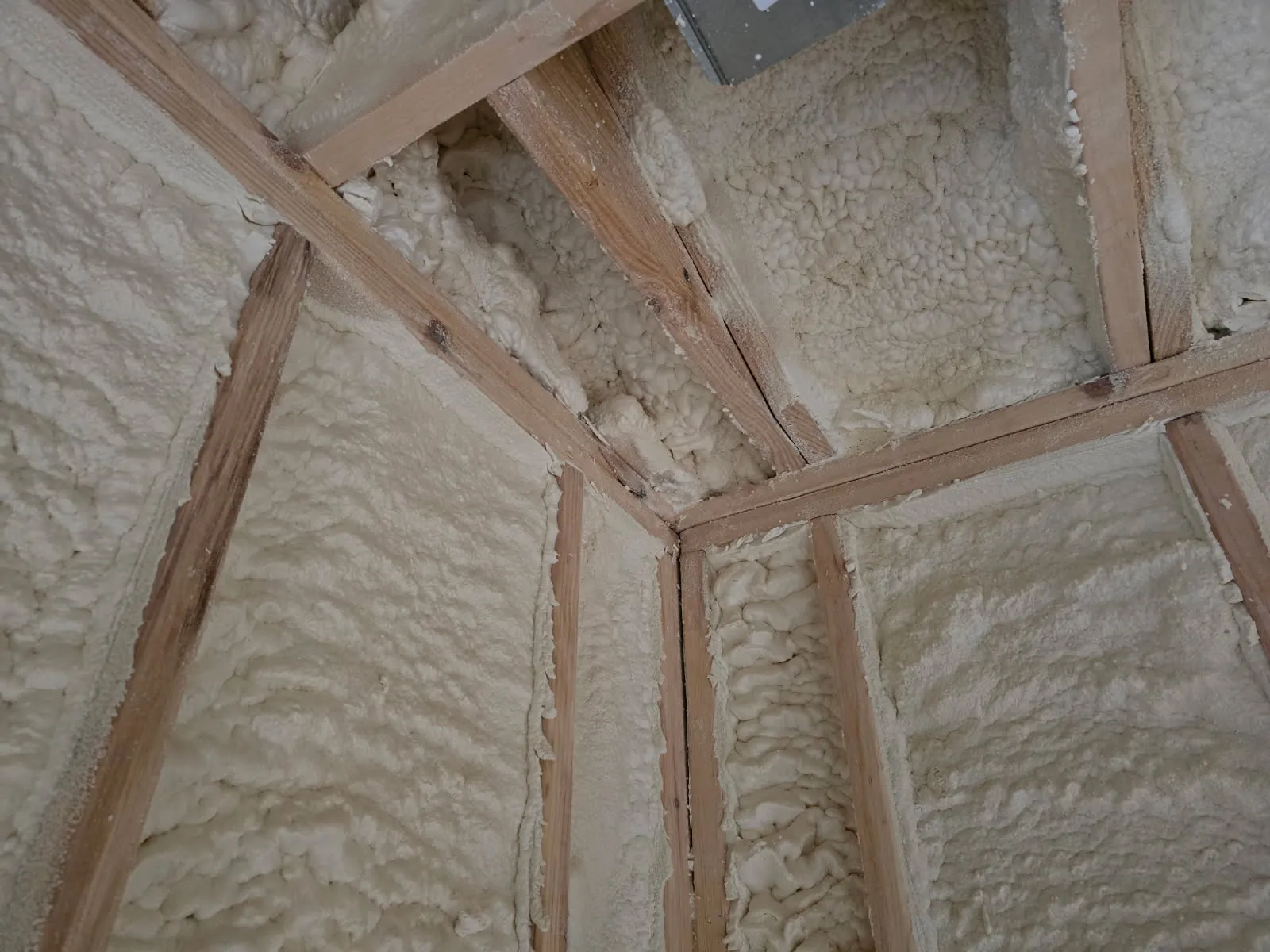
R-3.6 per inch with excellent air sealing and sound dampening. Ideal for new construction, multi-family, and commercial interiors.
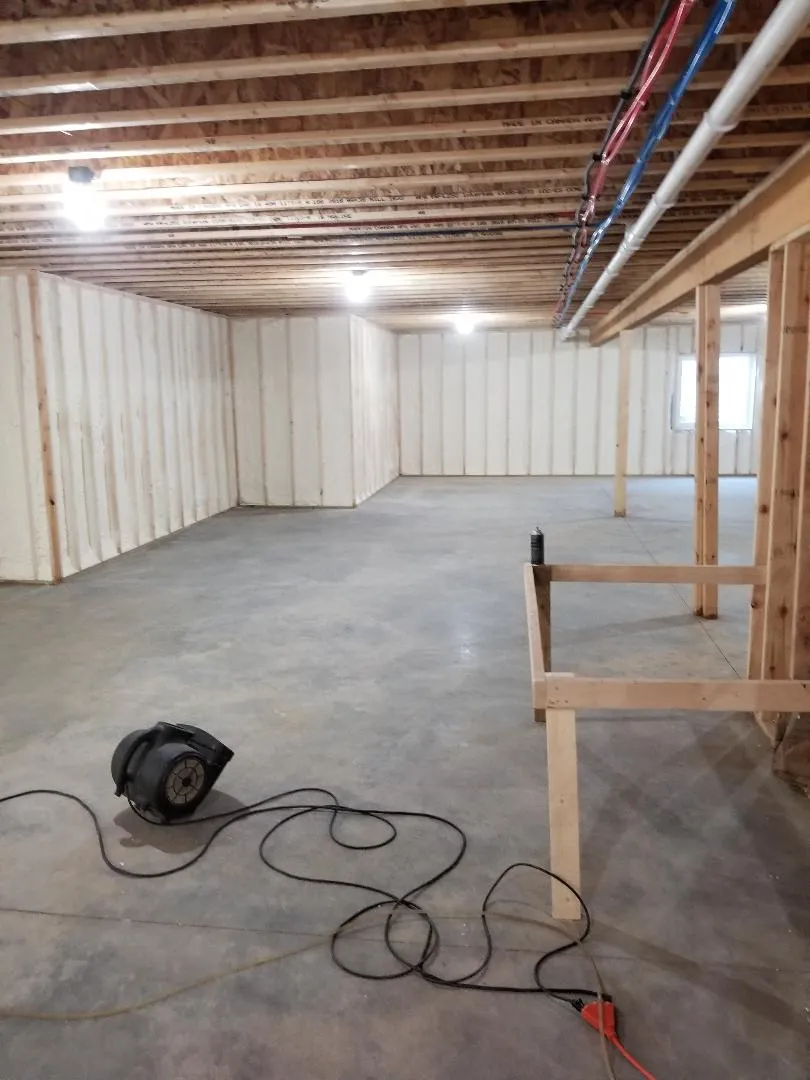
R-6.5 per inch with integrated vapor barrier and structural racking strength. The standard for commercial exteriors, metal buildings, and cold storage.
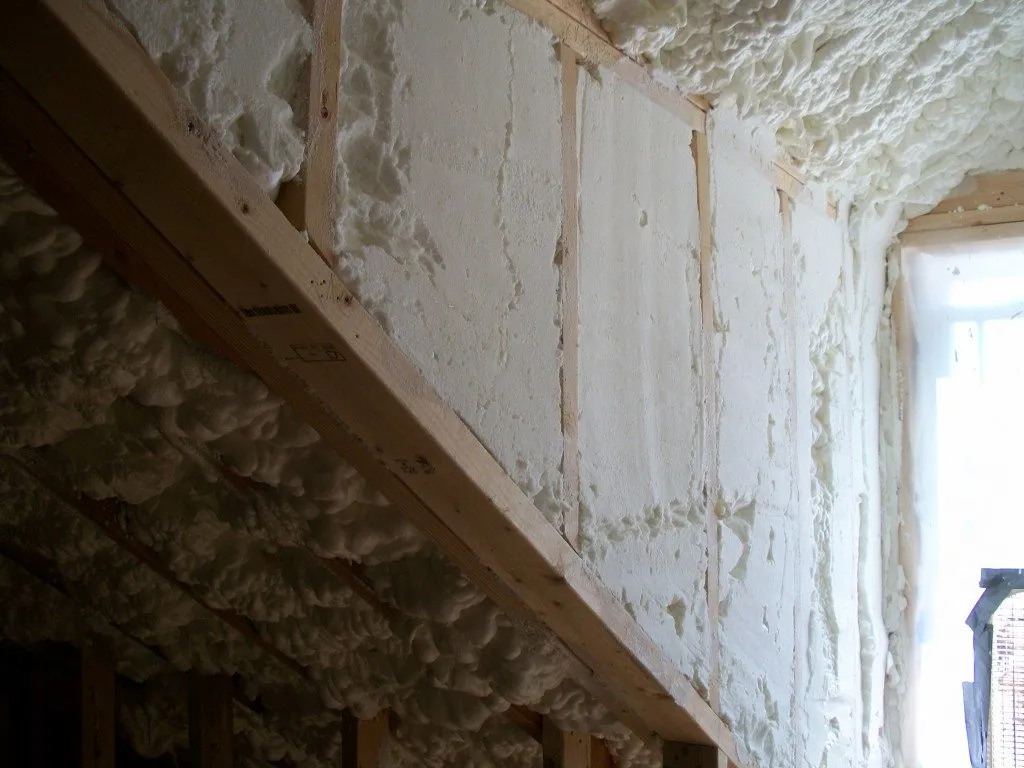
Stop losing heat through your roof. Attic spray foam targets the biggest source of energy loss in Indiana homes.
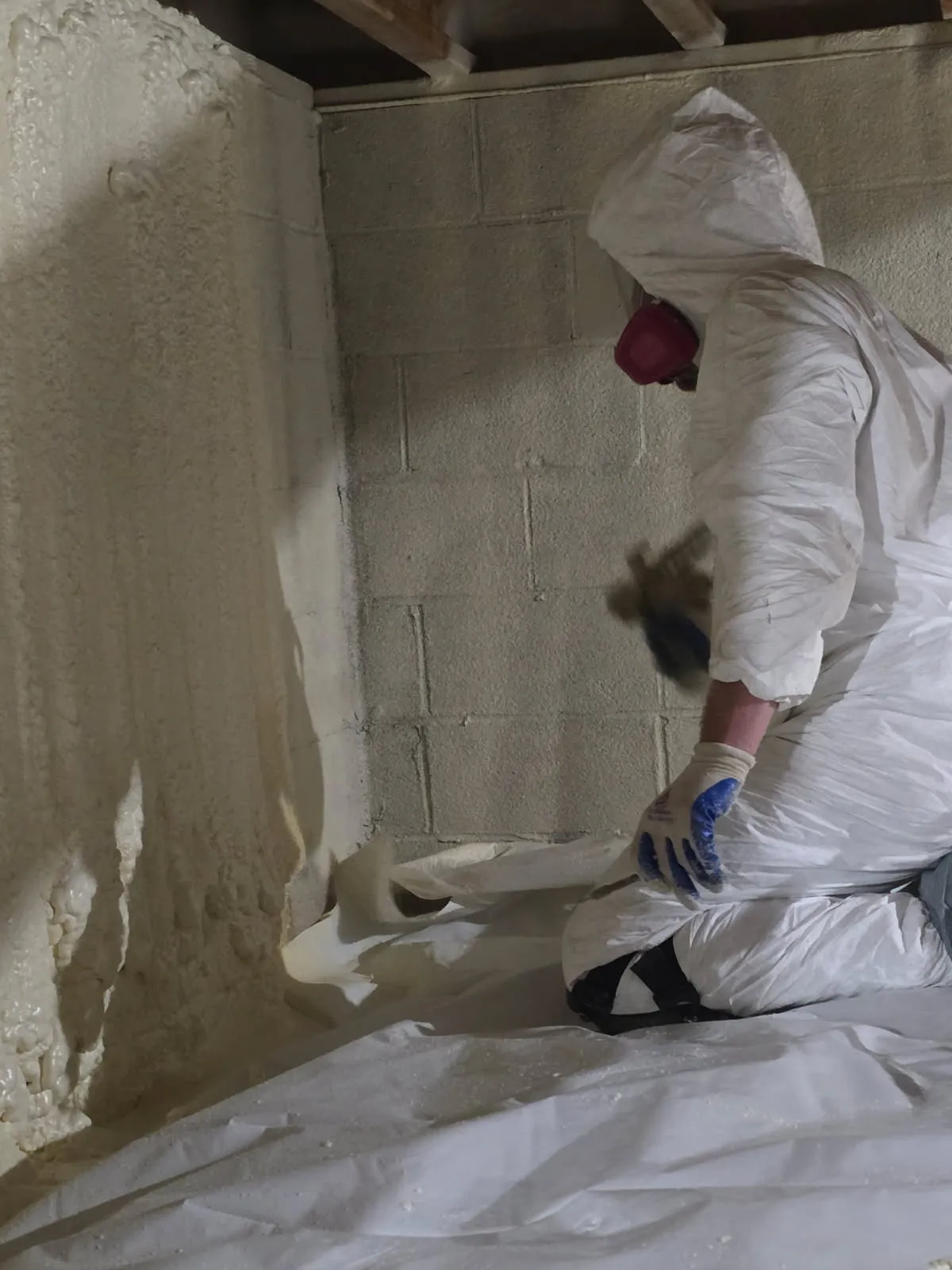
Seal out moisture, mold, and cold floors. Closed-cell crawl space encapsulation for a dry, energy-efficient foundation.
Get a free, no-obligation quote today.