Spray Foam Insulation Services in Kokomo
Professional spray foam and concrete lifting for homes and businesses
Spray Foam Insulation Services
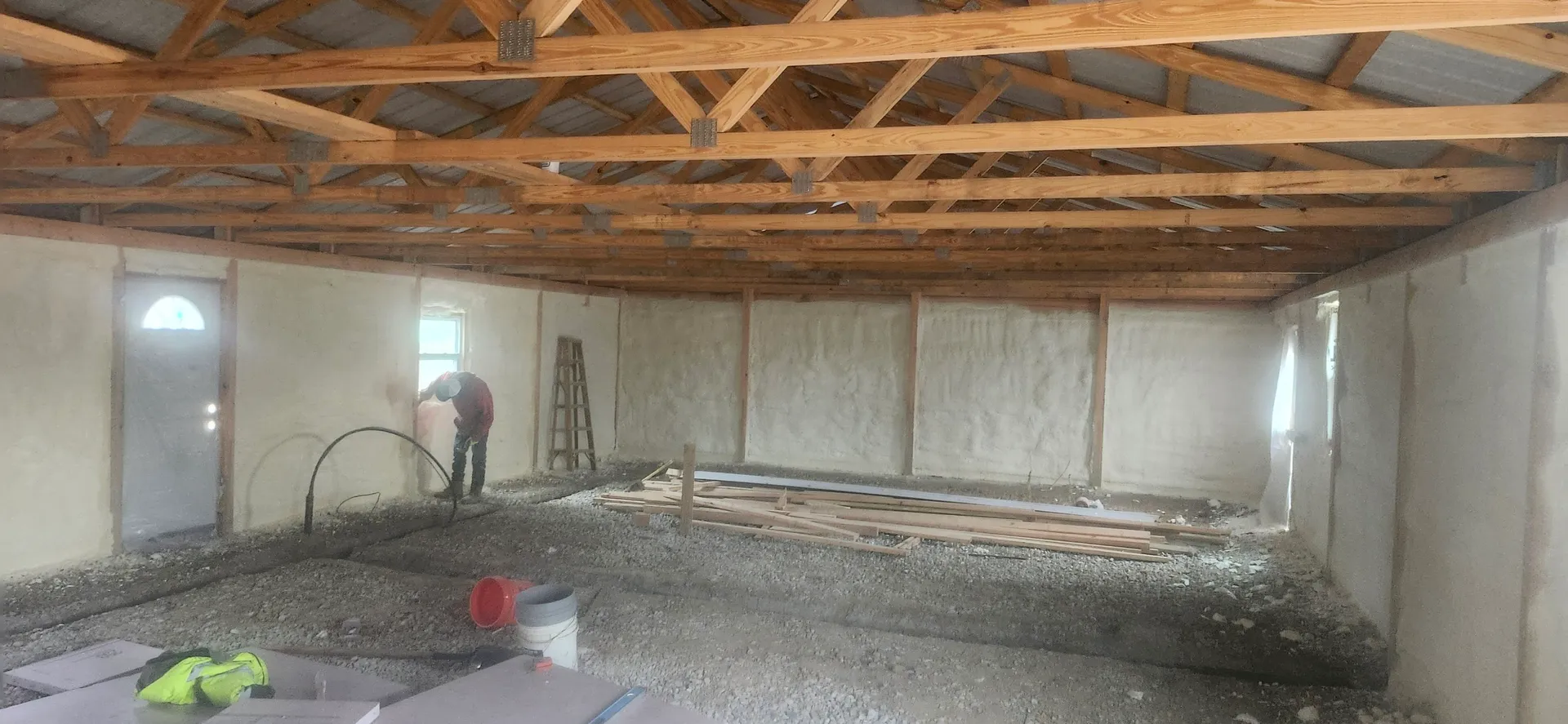
Spray Foam Insulation
We use spray foam where the building needs air sealing, moisture control, or a better thermal break. That can mean an attic, crawl space, rim joist, remodel, new build, shop, or commercial shell. We look at the space first and recommend open-cell or closed-cell based on what the job needs.
Foam Types: Open-Cell vs Closed-Cell
Different cellular structures, different performance characteristics. Selecting the right foam starts here.
Open-Cell Foam
R-3.6 per inch with excellent air sealing and sound dampening. Ideal for new construction, multi-family, and commercial interiors.
- Lowest cost per board foot of any spray foam
- Noticeably quieter, reduces sound between rooms and from outside
- Great for attics, interior walls, and bonus rooms
- Expands to fill every crack and cavity completely
Closed-Cell Foam
R-6.5 per inch with integrated vapor barrier and structural racking strength. The standard for commercial exteriors, metal buildings, and cold storage.
- Highest R-value of any spray-applied insulation (R-6.5 per inch)
- Acts as a vapor barrier
- Won't absorb water — ideal for moisture-prone areas
- Ideal for basements and crawl spaces
Application Areas
Each space presents unique thermal and moisture challenges. We specify the right foam system for each.
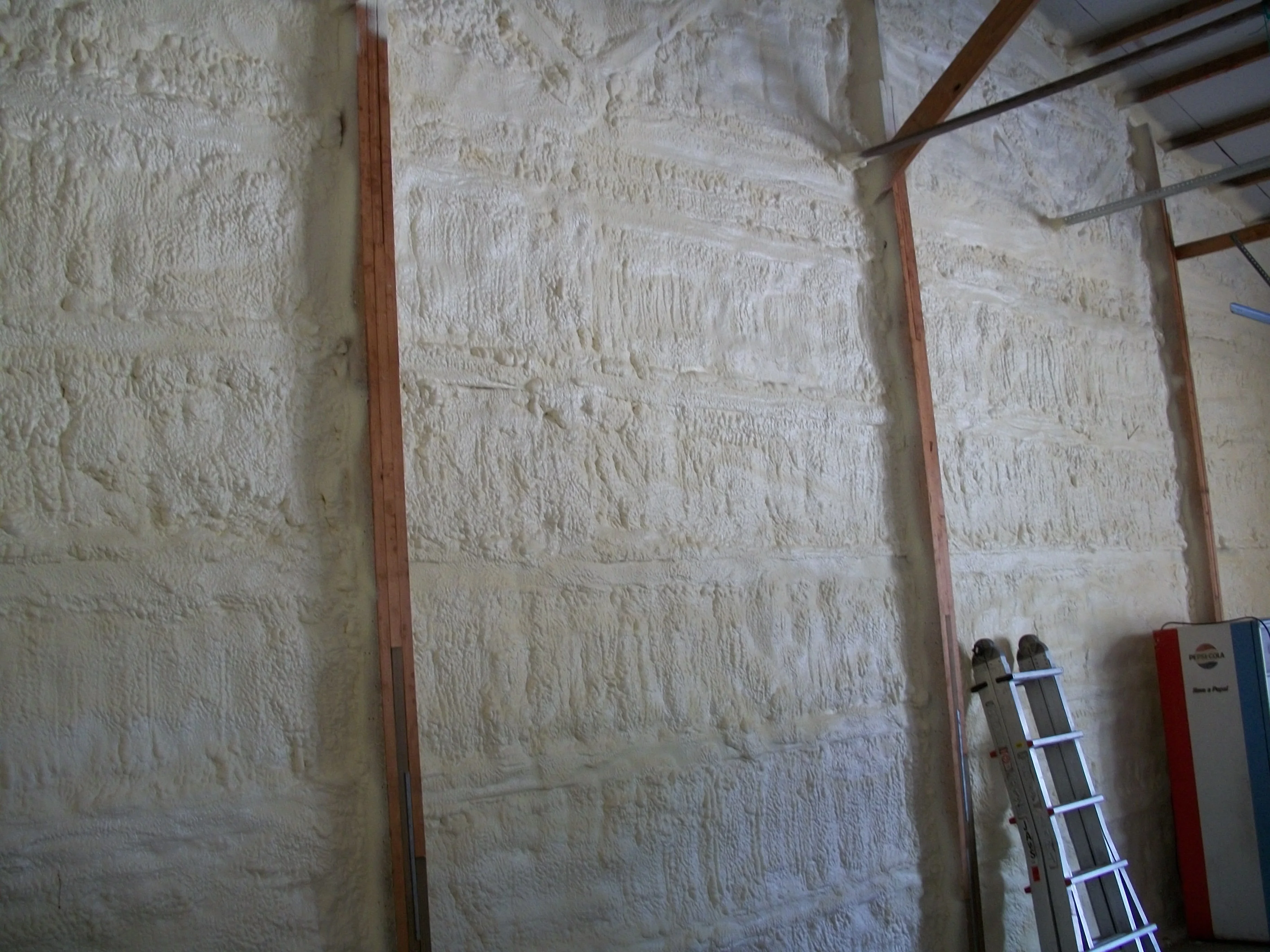
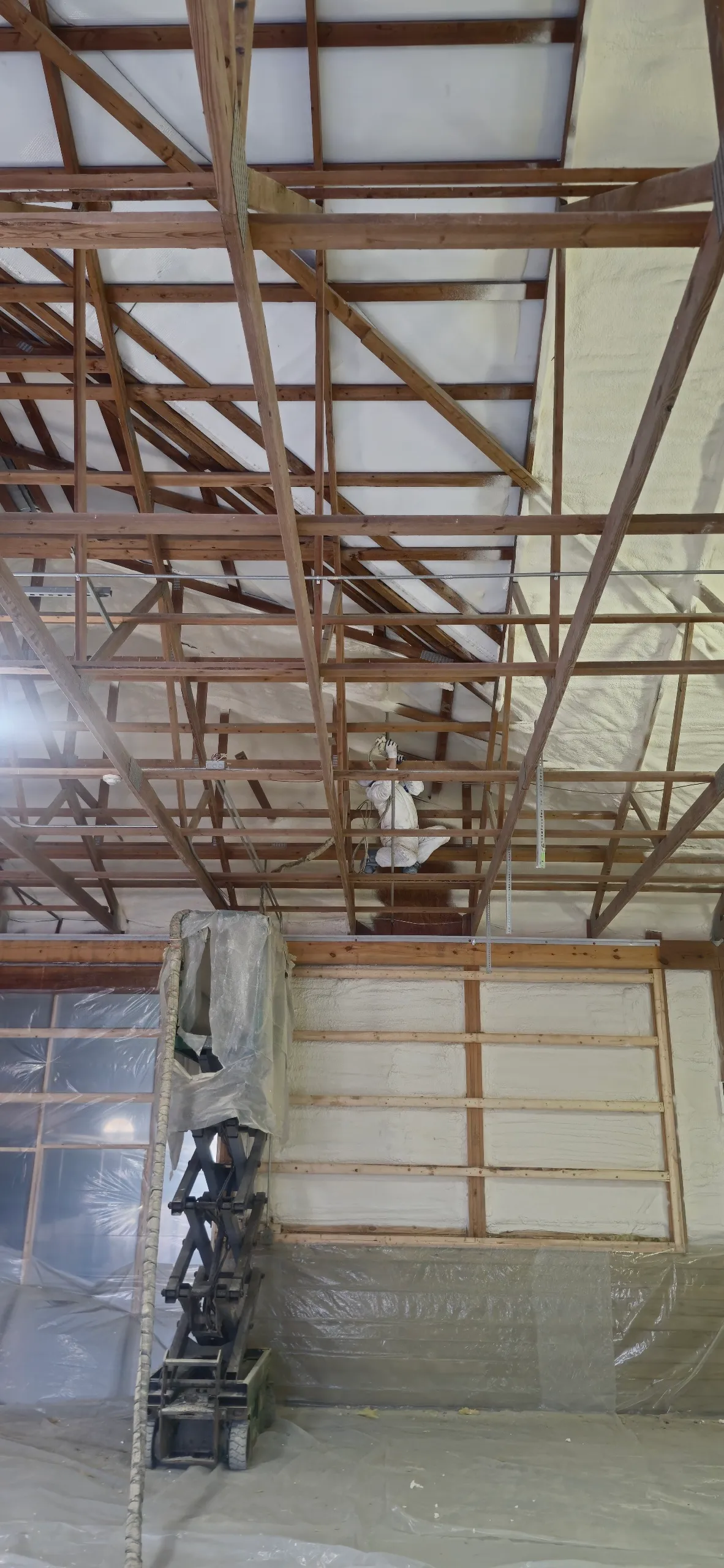
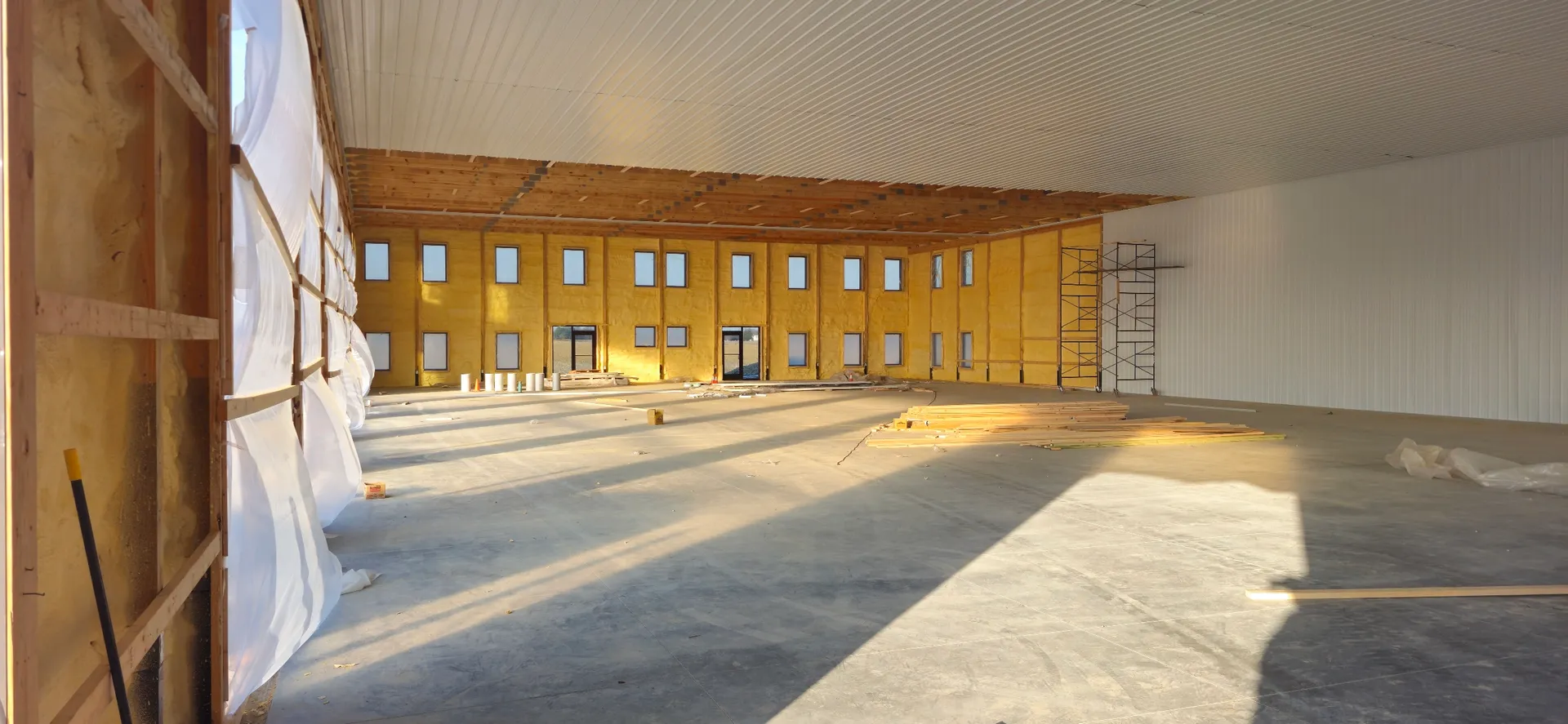
Fireblock & Caulking
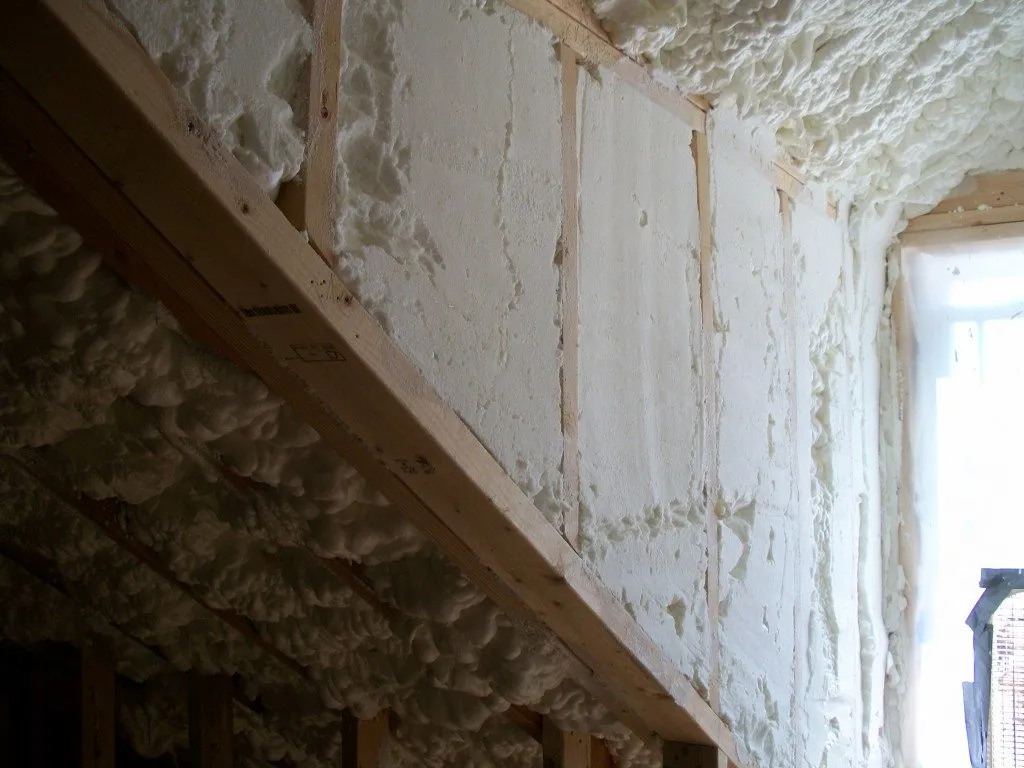
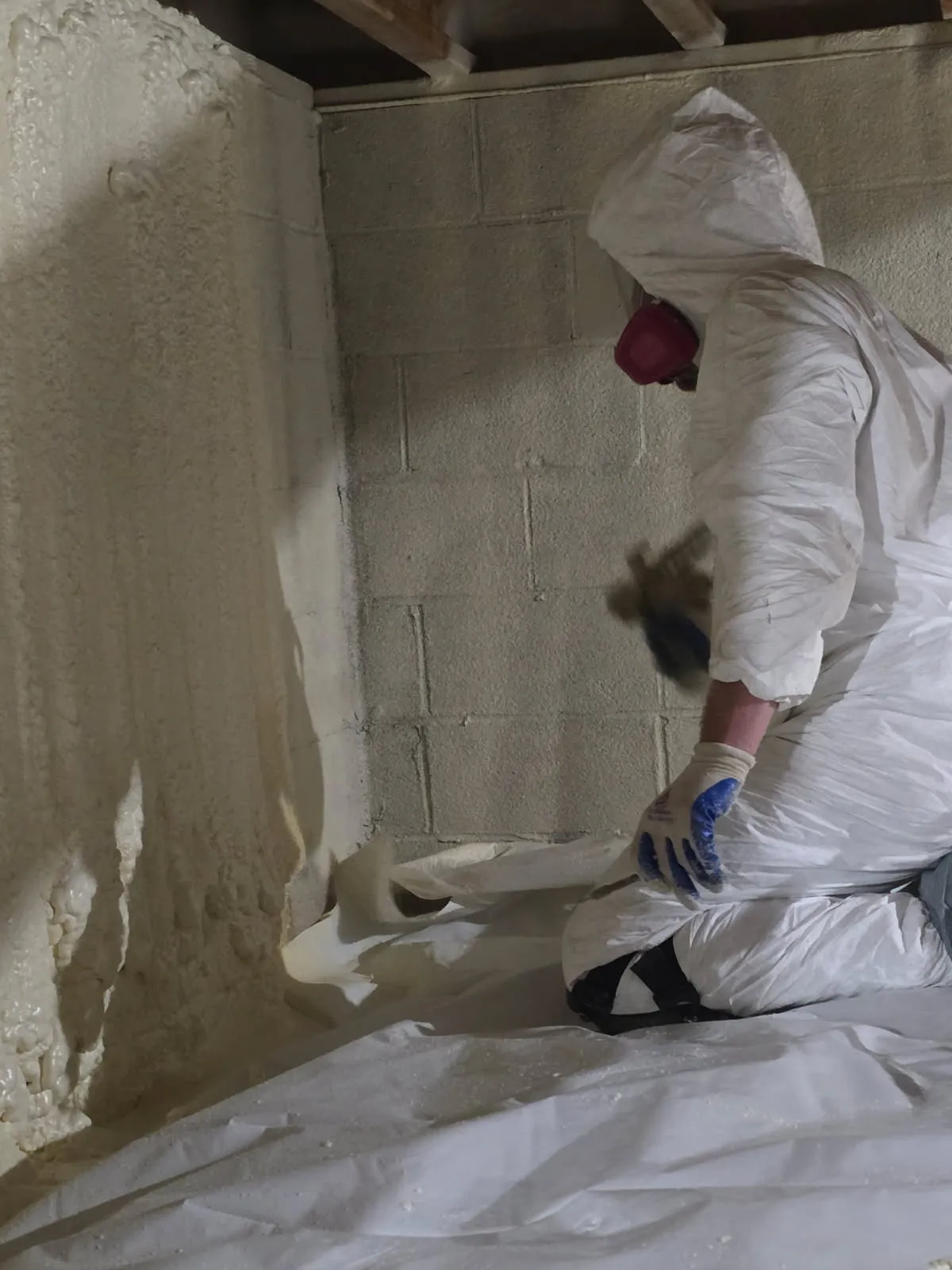
IRC Section R302.11 and IBC Section 718.2 require fireblocking at wall and floor penetrations in concealed cavities: plumbing, electrical, HVAC, and data runs. We apply fireblock foam to seal these openings, preventing fire from spreading through concealed wall and floor cavities while eliminating air bypass paths. Penetrations are inspected for proper fill depth before sign-off. This is integral to every insulation project and is included as standard practice.
- Meets fire code requirements
- Seals gaps around pipes, wires, ducts, and HVAC lines
- Stops conditioned air from leaking through walls
- Prevents fire from spreading through wall and floor cavities
Window & Door Sealing
Window and door rough openings are among the largest air leakage pathways in a typical building envelope. We use low-expansion polyurethane foam (formulated to exert minimal outward pressure on frame assemblies) combined with closed-cell backer rod and elastomeric sealant. The foam fills the shim space without distorting the frame, while the sealant provides a durable exterior weather seal. This approach eliminates drafts and reduces energy loss at one of the building's weakest air barrier points.
- Low-expansion foam application
- Eliminate drafts & air leaks
- Protect window & door frames
- Reduce energy loss
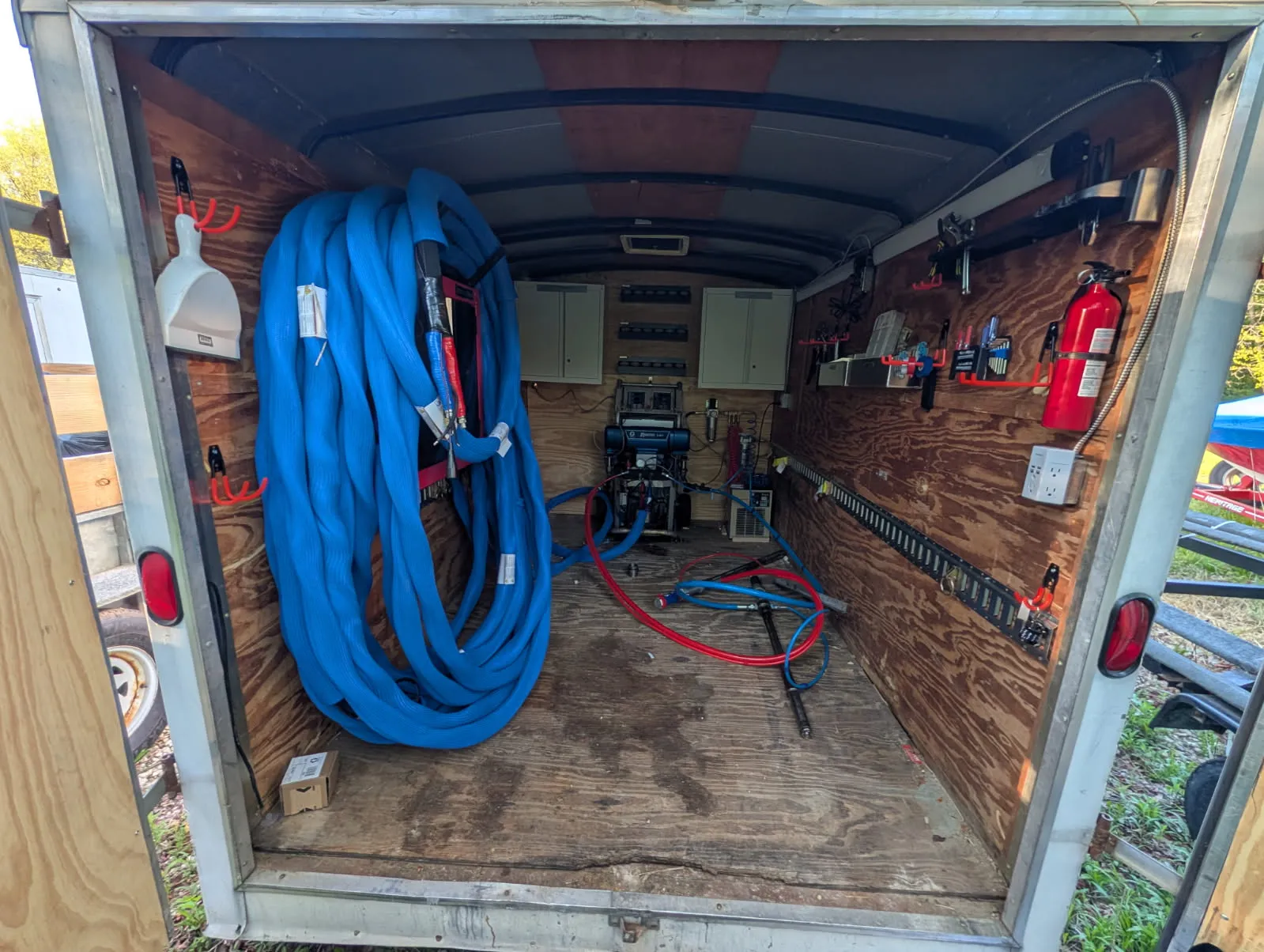
Spray Foam Rig Rental
Don't want to buy a spray rig? Rent ours. Most of the people who do are owners insulating their own pole barn, shop, or home. We bring a complete, ready-to-spray setup with open-cell or closed-cell foam, deliver it to your site, and show you how to run it. Contractors rent too, but you don't have to be one.
- Complete rig setup, ready to spray
- Open cell foam sets ~$4,000/set
- Closed cell foam sets ~$4,500/set
- Delivered to your site when we can make the trip
- We show you how to run it
Get Your Free Estimate
Describe your project and we'll provide a detailed scope of work.
Polyurethane Concrete Lifting
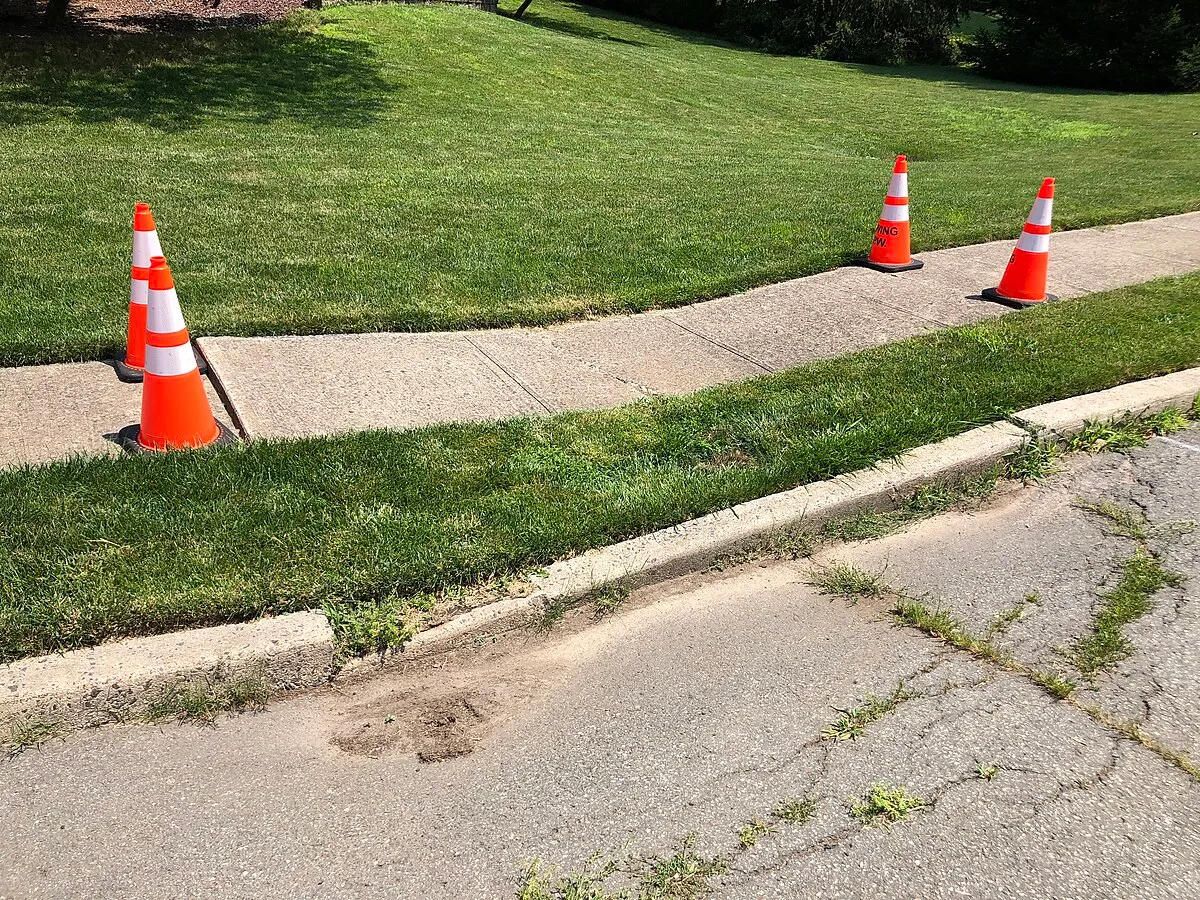
Concrete Lifting & Leveling
If a driveway, sidewalk, patio, or garage slab has settled but is not falling apart, foam lifting may bring it back without tearing everything out. We look at the concrete first and tell you when replacement is the better answer.
- Driveways, sidewalks, patios, and garage floors
- Small injection holes
- Often less disruptive than replacement
Technical FAQ
In-depth answers about materials, performance, and process.
Cost is driven by foam chemistry (open-cell vs. closed-cell), total board footage, required thickness to meet target R-value, and site access conditions. Open-cell ranges from $0.50–0.65/board foot, typically applied at 3.5–5.5 inches to achieve R-13 through R-20. Closed-cell ranges from $1.15–1.35/board foot and reaches R-13 at just 2 inches of applied thickness. Residential projects generally fall between $1,500 and $4,000. Elite Spray Foam Kokomo provides itemized quotes broken out by material, labor, and prep based on your project specifications.
Elite Spray Foam Kokomo has completed insulation projects spanning metal buildings, pole barns, warehouses, manufacturing facilities, cold-storage environments, multi-unit residential, office retrofits, and ground-up commercial construction. We work from architectural specs and coordinate with GCs and project managers on sequencing, vapor profile requirements, and fire-rating compliance. Commercial and industrial envelopes typically present higher infiltration rates due to larger penetration counts and unsealed metal panel joints. Spray foam addresses both thermal performance and air barrier continuity in a single application.
A standard residential cavity (attic, crawl space, or rim joist) runs 4–6 hours including masking, multi-pass application, thickness verification with depth gauges, trimming, and cleanup. Whole-home projects typically complete in 1–2 days. Larger commercial applications with 5,000+ square feet of coverage may require 2–3 days to allow for proper lift scheduling and curing between passes. We provide a detailed project timeline based on measured square footage and target R-values.
All surfaces outside the spray zone are masked with 6-mil poly sheeting and blue painter's tape. HVAC registers, electrical panels, and finished surfaces are sealed off to prevent overspray contact. The two-component foam reaches tack-free cure within 8–10 seconds of leaving the gun, which limits aerosol drift. Excess material is trimmed flush to the stud face using a reciprocating saw with a foam-cutting blade. We perform a walkthrough inspection and full debris removal before clearing the site.
Open-cell (0.5 lb/ft3 density) delivers R-3.6 per inch and is vapor-open — typically 10–16 perms at 3.5 inches installed thickness. Suited for interior cavities where drying potential to the interior is desirable. Closed-cell (2.0 lb/ft3 density) delivers R-6.5 per inch, functions as a Class II vapor retarder below 1.5 inches and a vapor barrier above 2 inches, and contributes racking strength to framed walls. Material selection depends on the assembly's vapor profile, required R-value, structural loading, and moisture exposure. We specify based on the building science of each application.
All installations carry a workmanship guarantee covering application quality, adhesion, and specified thickness. The underlying material performance is indefinite. Spray polyurethane foam does not lose R-value over time because its cellular structure is dimensionally stable. It does not absorb moisture, support mold growth, or compress under its own weight the way fibrous insulation does. In practice, the foam outlasts every other building component it contacts.
Full slab replacement involves saw-cutting, demolition, haul-off, sub-grade compaction, formwork, a 4-inch minimum pour with fiber mesh or rebar, and a 7-day cure before full loading. That process runs $3,000–$8,000 for a typical driveway. Polyurethane foam injection achieves the same grade correction for $800–$3,000 with same-day load bearing. The injected material is closed-cell polyurethane with a compressive strength of 40+ psi. It will not erode, wash out, or deform under sustained load.
Any slab-on-grade that is structurally intact (no through-cracking, major spalling, or rebar corrosion) is a candidate. That includes driveways, sidewalks, garage slabs, patios, pool decks, porch slabs, and stoops. We drill 5/8-inch injection ports on a grid pattern, inject expanding polyurethane into sub-slab voids, and hydraulically raise the slab to target elevation. Settlement caused by soil washout, organic decomposition, or poor initial compaction all respond well to this method. Each slab is evaluated individually for structural soundness before we proceed.
We drill 5/8-inch injection ports at calculated intervals across the slab, insert the injection gun, and pump two-component high-density polyurethane beneath the concrete. The foam expands to fill sub-slab voids, displaces loose material, and generates hydraulic pressure that raises the slab. We monitor elevation in real time using a rotary laser level and adjust injection volume per port to control lift precision. The foam reaches 90% compressive strength within 15 minutes. Most residential jobs complete in 2–4 hours, and the surface is traffic-ready the same day.
Need Help Choosing the Right Solution?
We'll figure out what you need and give you a clear recommendation.