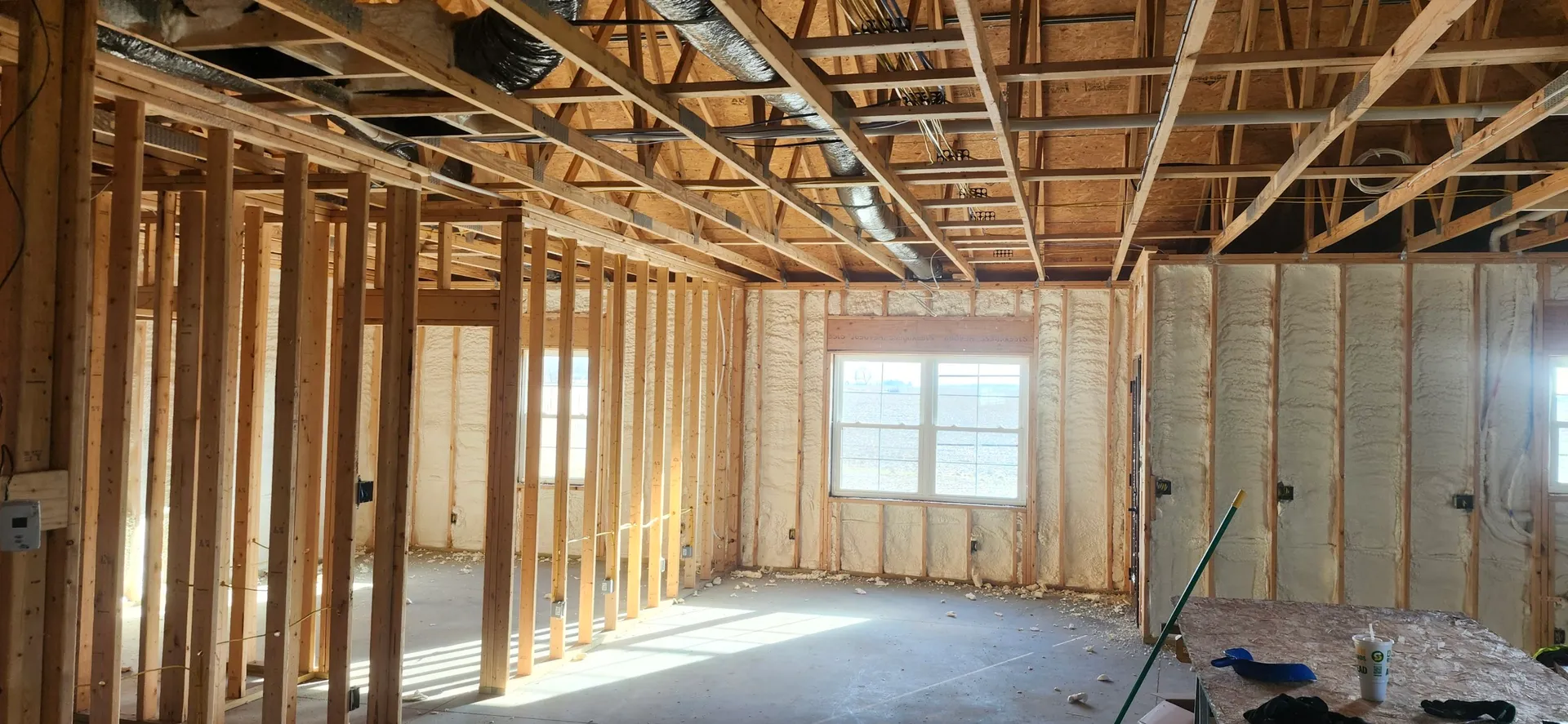
Spray Foam Insulation in Logansport, IN
Professional spray foam insulation in Kokomo, IN. Expert installation for residential, commercial, and industrial properties. New construction, renovations, and retrofits.
- Attics, crawl spaces, pole barns, and metal buildings
- Commercial and industrial scopes quoted clearly
- Concrete lifting for settled slabs
Get a Free Estimate
Tell us what you're working on and what is happening in the space. We'll follow up with the right next step.
Get a Free Estimate
Tell us what you're working on and what is happening in the space. We'll follow up with the right next step.
Logansport sits at the confluence of the Eel and Wabash Rivers, creating elevated humidity levels that make moisture-resistant spray foam insulation critical for homes near the floodplain. The city's Victorian and early-20th-century housing stock along the canal district features balloon-frame walls with plaster-and-lath interiors and no insulation cavity — construction where heated air travels freely from the basement sill to the attic through continuous stud bays.
Our Services in Logansport
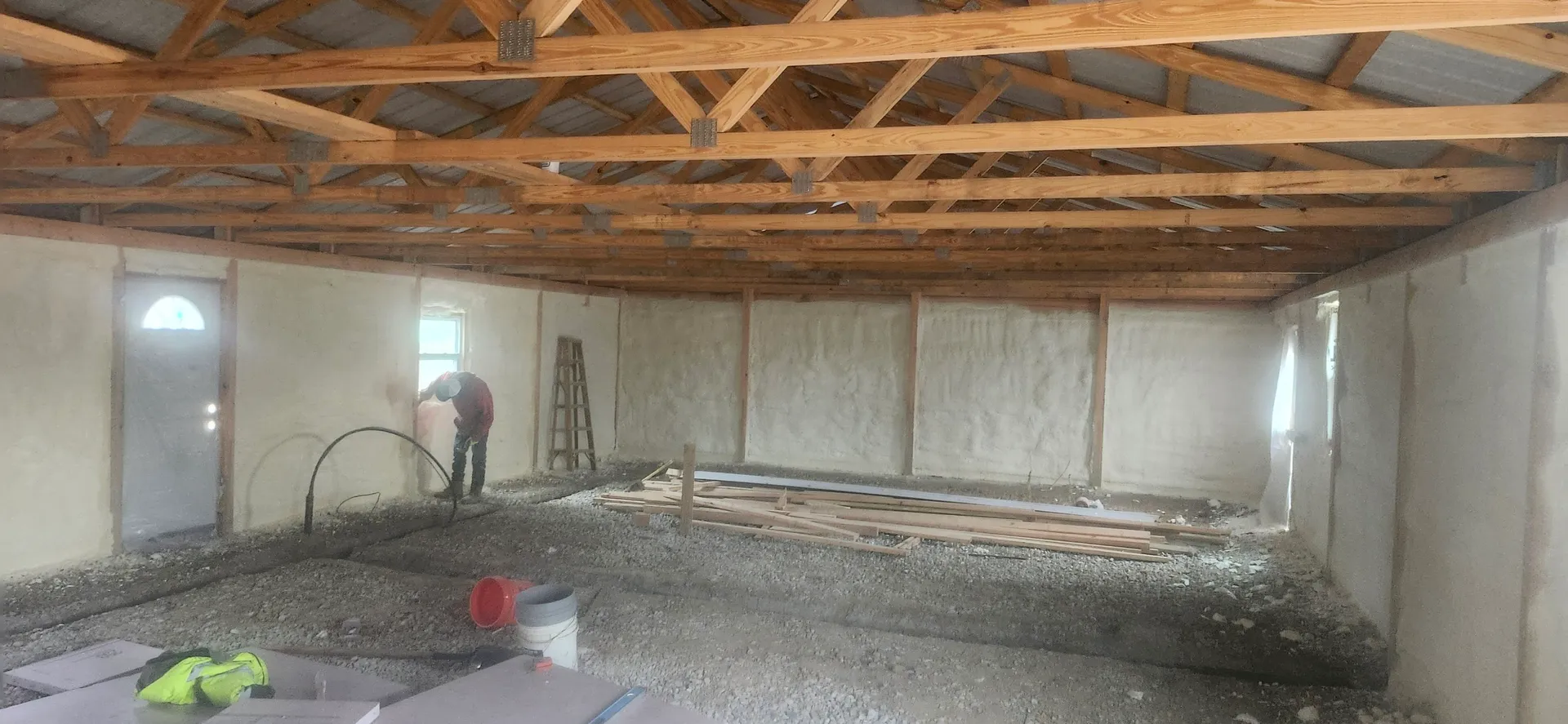
Spray Foam Insulation
Open-cell and closed-cell foam for homes, remodels, new builds, shops, and commercial spaces.
- Attics, crawl spaces, remodels, and new builds
- Foam type and thickness matched to the space
- Good fit for air leaks and temperature swings
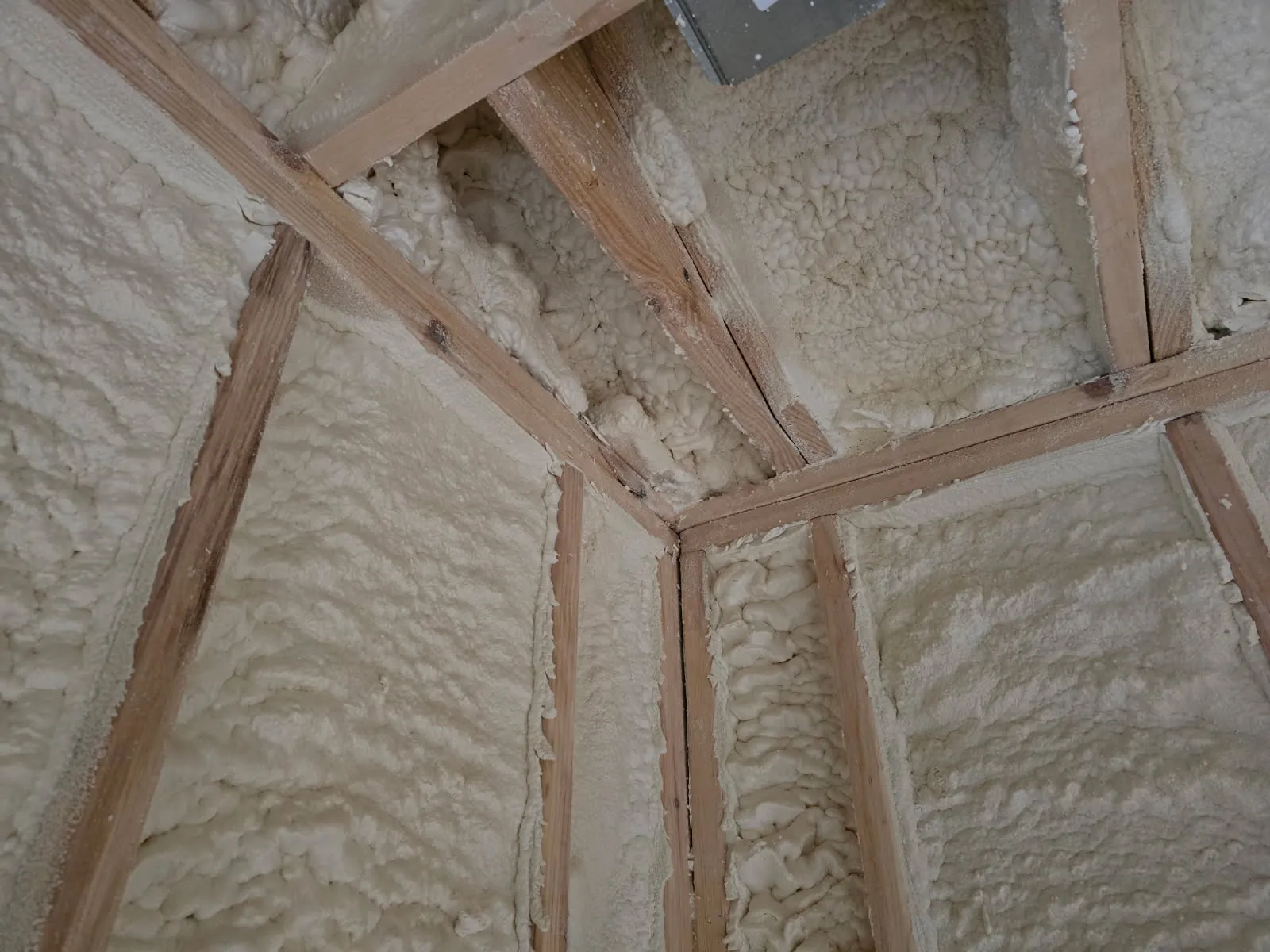
Open-Cell Foam
R-3.6 per inch with excellent air sealing and sound dampening. Ideal for new construction, multi-family, and commercial interiors.
- Lowest cost per board foot of any spray foam
- Noticeably quieter, reduces sound between rooms and from outside
- Great for attics, interior walls, and bonus rooms
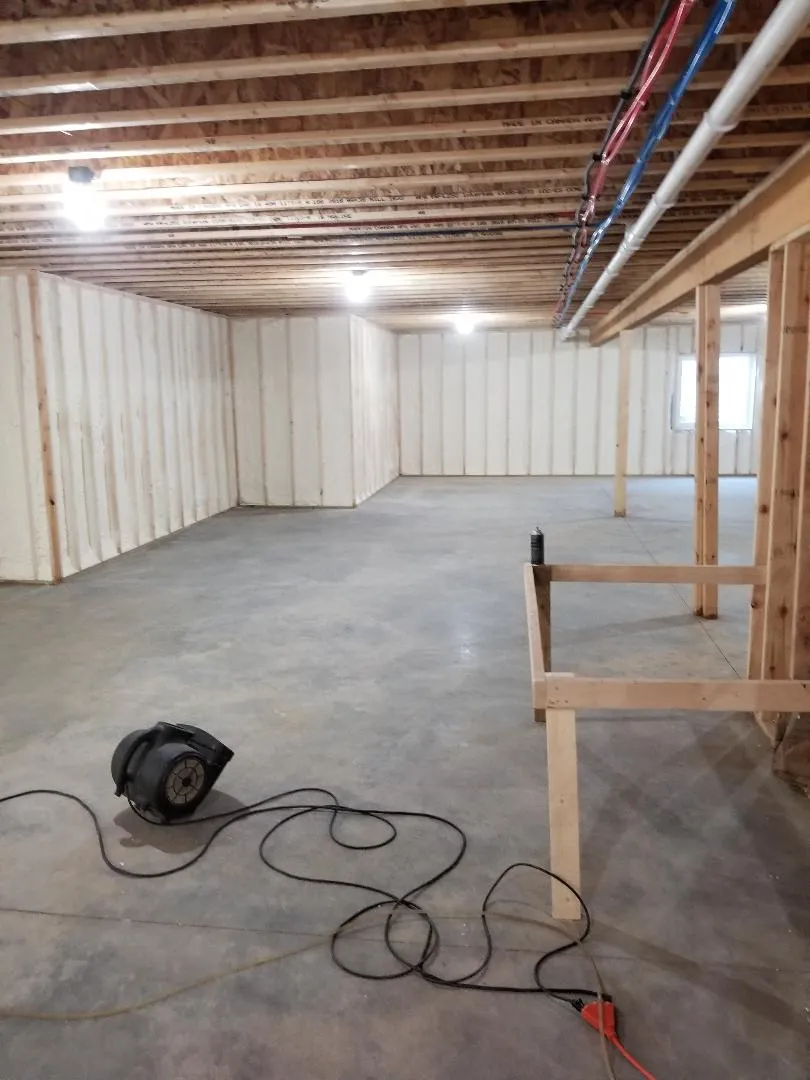
Closed-Cell Foam
R-6.5 per inch with integrated vapor barrier and structural racking strength. The standard for commercial exteriors, metal buildings, and cold storage.
- Highest R-value of any spray-applied insulation (R-6.5 per inch)
- Acts as a vapor barrier
- Won't absorb water — ideal for moisture-prone areas
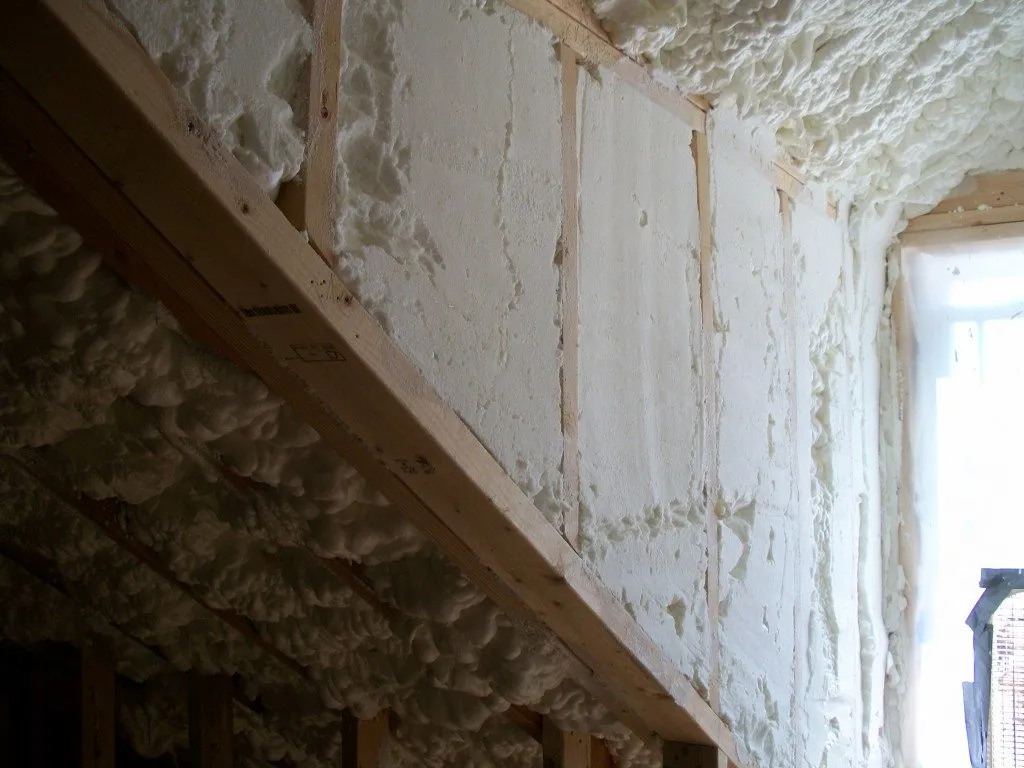
Attic Insulation
Stop losing heat through your roof. Attic spray foam targets the biggest source of energy loss in Indiana homes.
- Reduce heating and cooling loads immediately
- Prevent ice dam formation in winter
- Create conditioned attic space when applied to roof deck
How It Works
Tell Us What You're Working On
Send the address, building type, a few photos, and the problem: drafts, hot or cold rooms, crawl space moisture, condensation, a commercial schedule, or a settled slab.
Check the Conditions
We look at access, substrate, moisture, square footage, target thickness, and timeline. Then we explain whether open-cell, closed-cell, concrete lifting, or a different scope is the right fit.
Install to the Scope
We protect the work area, install the agreed foam or lifting work, check coverage, and clean up. For commercial and industrial work, we coordinate with job-site schedule and access needs.
Spray Foam Insulation FAQ — Logansport
Cost is driven by foam chemistry (open-cell vs. closed-cell), total board footage, required thickness to meet target R-value, and site access conditions. Open-cell ranges from $0.50–0.65/board foot, typically applied at 3.5–5.5 inches to achieve R-13 through R-20. Closed-cell ranges from $1.15–1.35/board foot and reaches R-13 at just 2 inches of applied thickness. Residential projects generally fall between $1,500 and $4,000. Elite Spray Foam Kokomo provides itemized quotes broken out by material, labor, and prep based on your project specifications.
Elite Spray Foam Kokomo has completed insulation projects spanning metal buildings, pole barns, warehouses, manufacturing facilities, cold-storage environments, multi-unit residential, office retrofits, and ground-up commercial construction. We work from architectural specs and coordinate with GCs and project managers on sequencing, vapor profile requirements, and fire-rating compliance. Commercial and industrial envelopes typically present higher infiltration rates due to larger penetration counts and unsealed metal panel joints. Spray foam addresses both thermal performance and air barrier continuity in a single application.
A standard residential cavity (attic, crawl space, or rim joist) runs 4–6 hours including masking, multi-pass application, thickness verification with depth gauges, trimming, and cleanup. Whole-home projects typically complete in 1–2 days. Larger commercial applications with 5,000+ square feet of coverage may require 2–3 days to allow for proper lift scheduling and curing between passes. We provide a detailed project timeline based on measured square footage and target R-values.
All surfaces outside the spray zone are masked with 6-mil poly sheeting and blue painter's tape. HVAC registers, electrical panels, and finished surfaces are sealed off to prevent overspray contact. The two-component foam reaches tack-free cure within 8–10 seconds of leaving the gun, which limits aerosol drift. Excess material is trimmed flush to the stud face using a reciprocating saw with a foam-cutting blade. We perform a walkthrough inspection and full debris removal before clearing the site.
Open-cell (0.5 lb/ft3 density) delivers R-3.6 per inch and is vapor-open — typically 10–16 perms at 3.5 inches installed thickness. Suited for interior cavities where drying potential to the interior is desirable. Closed-cell (2.0 lb/ft3 density) delivers R-6.5 per inch, functions as a Class II vapor retarder below 1.5 inches and a vapor barrier above 2 inches, and contributes racking strength to framed walls. Material selection depends on the assembly's vapor profile, required R-value, structural loading, and moisture exposure. We specify based on the building science of each application.
All installations carry a workmanship guarantee covering application quality, adhesion, and specified thickness. The underlying material performance is indefinite. Spray polyurethane foam does not lose R-value over time because its cellular structure is dimensionally stable. It does not absorb moisture, support mold growth, or compress under its own weight the way fibrous insulation does. In practice, the foam outlasts every other building component it contacts.
Full slab replacement involves saw-cutting, demolition, haul-off, sub-grade compaction, formwork, a 4-inch minimum pour with fiber mesh or rebar, and a 7-day cure before full loading. That process runs $3,000–$8,000 for a typical driveway. Polyurethane foam injection achieves the same grade correction for $800–$3,000 with same-day load bearing. The injected material is closed-cell polyurethane with a compressive strength of 40+ psi. It will not erode, wash out, or deform under sustained load.
Any slab-on-grade that is structurally intact (no through-cracking, major spalling, or rebar corrosion) is a candidate. That includes driveways, sidewalks, garage slabs, patios, pool decks, porch slabs, and stoops. We drill 5/8-inch injection ports on a grid pattern, inject expanding polyurethane into sub-slab voids, and hydraulically raise the slab to target elevation. Settlement caused by soil washout, organic decomposition, or poor initial compaction all respond well to this method. Each slab is evaluated individually for structural soundness before we proceed.
We drill 5/8-inch injection ports at calculated intervals across the slab, insert the injection gun, and pump two-component high-density polyurethane beneath the concrete. The foam expands to fill sub-slab voids, displaces loose material, and generates hydraulic pressure that raises the slab. We monitor elevation in real time using a rotary laser level and adjust injection volume per port to control lift precision. The foam reaches 90% compressive strength within 15 minutes. Most residential jobs complete in 2–4 hours, and the surface is traffic-ready the same day.
Nearby Service Areas
Ready for Spray Foam Insulation in Logansport?
Get a free, no-obligation quote today.